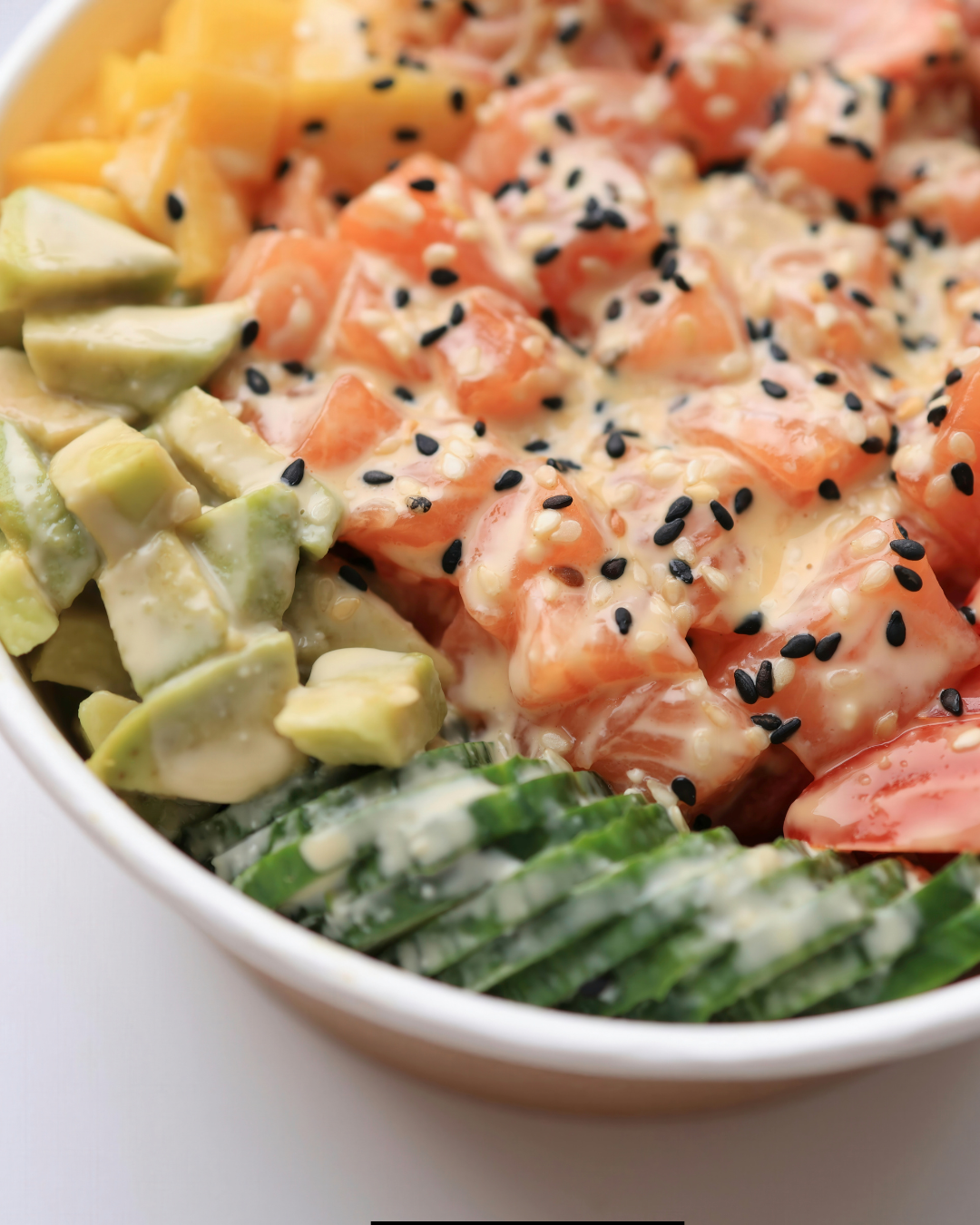
I used to think salmon was one of those ingredients that only really worked in fancy restaurants or in the hands of someone who actually knew what they were doing in the kitchen. Turns out I was completely wrong. Once I figured out how simple it is to get a beautifully seared piece of salmon with a golden, crispy skin and a tender, flaky centre, there was no going back. And pairing it with a fresh, vibrant Salmon Salad Bowl? That combination makes sense in every possible way.
Table of Contents
How to make Salmon Salad Bowl
A Salmon Salad Bowl is a nourishing, restaurant-style bowl built around salmon as the hero protein, layered over a fresh base with a mix of toppings and a flavourful dressing that ties everything together.
Ingredients
For the Salmon:
- 2 salmon fillets, skin on — skin-on fillets give you that incredible crispy skin that adds texture and flavour to the whole bowl. Look for fillets that are roughly the same thickness so they cook evenly. Fresh is ideal but good quality frozen salmon, fully thawed, works perfectly well too.
- 1 tbsp olive oil — for searing. You want something with a decent smoke point here.
- 1 tsp garlic powder — adds a gentle savoury depth without overpowering the natural flavour of the salmon.
- 1 tsp smoked paprika — gives the salmon a beautiful colour and a subtle smoky warmth.
- ½ tsp onion powder
- ½ tsp salt
- ¼ tsp black pepper
- Juice of ½ lemon — squeezed over the salmon just before serving to brighten everything up and cut through the richness.
For the Salad Base:
- 2 large handfuls of mixed greens or baby spinach — the fresh, leafy foundation of the bowl. Use whatever you love or whatever is in the fridge.
- ½ cup cooked quinoa or brown rice — optional but highly recommended if you want the bowl to be more substantial and filling. Cook it according to the packet instructions and let it cool slightly before assembling.
- 1 large avocado, sliced — creamy, rich, and absolutely essential. It balances the acidity of the dressing and the richness of the salmon beautifully.
- 1 cup cucumber, thinly sliced — cool, refreshing, and adds a lovely crunch.
- 1 cup cherry tomatoes, halved — sweet and juicy. They pop against the other flavours in the bowl.
- ½ cup edamame beans, shelled — adds protein, a beautiful pop of green colour, and a slightly sweet, nutty flavour. Use frozen edamame, thawed and briefly blanched.
- ¼ red cabbage, thinly shredded — vibrant purple, crunchy, and packed with goodness. It adds a beautiful colour contrast in the bowl.
- 2 radishes, thinly sliced — peppery, crisp, and gorgeous. They add a subtle heat and a beautiful pink colour.
- 2 spring onions, thinly sliced — mild, fresh onion flavour that weaves through the whole bowl.
- 1 tbsp sesame seeds, toasted — tiny but mighty. They add a nutty crunch and make the whole bowl look properly finished and restaurant-worthy.
- Small handful of fresh coriander or parsley — bright, herby, and fresh. Scattered over the top right at the end.
For the Miso Ginger Dressing:
- 2 tbsp white miso paste — the umami backbone of the dressing. Salty, savoury, and deeply flavourful without being overwhelming.
- 1 tbsp sesame oil — nutty and aromatic. A little goes a very long way here.
- 2 tbsp rice wine vinegar — sharp and clean. It balances the richness of the miso and sesame oil perfectly.
- 1 tbsp soy sauce or tamari — adds depth and saltiness. Use tamari if you’re keeping things gluten-free.
- 1 tsp fresh ginger, grated — zingy, warming, and absolutely essential. Fresh ginger makes a world of difference here — don’t use dried.
- 1 tsp honey or maple syrup — just enough sweetness to balance the saltiness and acidity.
- 1–2 tbsp warm water — to loosen the dressing to a pourable consistency.
- Optional: 1 tsp sriracha — if you want a gentle background heat running through the dressing.
Step by Step
- If you’re adding a grain base to your bowl, start here since it takes the longest. Cook your quinoa or brown rice according to the packet instructions. Once cooked, fluff it with a fork, season lightly with salt, and set aside to cool slightly. You don’t want it piping hot when you assemble the bowl or it’ll wilt your greens.
- Add your miso paste, sesame oil, rice wine vinegar, soy sauce, grated ginger, and honey into a small bowl or jar. Whisk together until smooth — the miso can be a little stubborn at first so really work it in. Add warm water a little at a time until you reach a pourable consistency. Taste it and adjust — more honey if it needs sweetness, more vinegar if it needs sharpness, more soy if it needs salt. Set aside.
- While the dressing sits and the grains cool, prep everything else. Slice your cucumber, halve your cherry tomatoes, shred your red cabbage, slice your radishes and spring onions, dice your avocado, and thaw your edamame. Lay everything out ready to assemble — this is the part that makes the final bowl come together so quickly and easily.
- Pat your salmon fillets completely dry with kitchen paper — this is the single most important step for getting a crispy skin. Moisture is the enemy of a good sear. Mix your garlic powder, smoked paprika, onion powder, salt, and pepper together and rub the spice mix all over the flesh side of the salmon. Leave the skin bare.
- Heat your olive oil in a non-stick pan over medium-high heat until it’s hot and shimmering. Place the salmon fillets skin-side down into the pan and press them gently with a spatula for the first 30 seconds to stop the skin from curling up. Cook skin-side down for 4–5 minutes without moving them — you want that skin to get properly golden and crispy. Flip and cook for a further 2–3 minutes on the flesh side until the salmon is just cooked through. It should still be slightly translucent in the very centre — that’s perfectly safe and means it won’t be dry. Squeeze your lemon juice over the top and remove from the heat.
- Start with your greens as the base. Add a scoop of quinoa or rice to one side if using. Arrange your cucumber, cherry tomatoes, edamame, shredded cabbage, radishes, and avocado around the bowl in sections — take a moment to think about colour placement. This is your bowl, make it look beautiful.
- Place your seared salmon fillet on top of the bowl — either whole with that gorgeous crispy skin facing up, or flaked into large chunks across the top. Both work brilliantly.
- Drizzle your miso ginger dressing generously over the whole bowl. Scatter your toasted sesame seeds, sliced spring onions, and fresh coriander or parsley over the top. Add a wedge of lemon on the side for squeezing. Serve immediately while the salmon is still warm.
Tips That’ll Take This Bowl to the Next Level
- Dry your salmon properly. I know I already said this in the instructions but it bears repeating — patting your salmon fillets completely dry before searing is the difference between a crispy, golden skin and a sad, steamed one. Use kitchen paper and be thorough about it.
- Don’t move the salmon once it’s in the pan. Once that skin hits the hot oil, leave it alone. Moving it too early tears the skin and you lose all that beautiful crispiness you’re working towards. Trust the process, walk away, and let the heat do its thing.
- Season the dressing last. The miso and soy sauce are both quite salty, so taste the dressing before adding any extra salt. It’s much easier to add more seasoning than to fix an oversalted dressing.
- Toast your sesame seeds. This takes literally two minutes in a dry pan over medium heat and transforms them completely. Toasted sesame seeds are nuttier, more aromatic, and infinitely more flavourful than untoasted ones. Shake the pan constantly and pull them off the heat the moment they turn golden.
- Use a non-stick pan for the salmon. Unless you’re very confident with stainless steel or cast iron, a good non-stick pan makes the whole process much more forgiving and significantly reduces the risk of the skin sticking and tearing.
What to serve with
Here’s the thing about a Salmon Salad Bowl — it’s already a pretty complete meal on its own. You’ve got your protein, your greens, your healthy fats, your crunch.
- Warm pitta bread — Soft, pillowy pitta straight from a hot pan or toaster is one of the simplest and most satisfying things you can serve alongside this bowl. Tear it and use it to scoop up the avocado and dressing from the bottom of the bowl—honestly one of life’s simple pleasures.
- Crusty sourdough — A thick slice of good sourdough with a little butter is all you need to turn this bowl into a genuinely hearty meal. The slight tang of the sourdough plays really nicely against the miso ginger dressing.
- Garlic flatbread — Homemade or shop-bought, a warm garlic flatbread on the side adds a comforting, indulgent element that balances the lightness of the salad bowl beautifully. Great if you’re feeding people who tend to leave the table hungry after a salad.
- Steamed jasmine rice on the side — If you haven’t added grains to the bowl itself, a small bowl of steamed jasmine rice alongside is a lovely addition. Light, fragrant, and perfect for soaking up that incredible miso ginger dressing.
- Brown rice or wild rice — Nuttier and more textured than white rice. Serves the same purpose but adds a slightly more wholesome, earthy quality to the meal.
- Noodles — Cold soba noodles tossed in a little sesame oil and soy sauce served alongside the bowl, lean into those Japanese-inspired flavours already in the dressing. It turns the whole meal into something that feels very intentional and put-together.
Ingredients Substitutes
Here’s how to swap every single ingredient in this bowl without losing what makes it so special. Think of this less as a compromise guide and more as a permission slip to make this recipe truly yours.
Salmon Substitutes
- Trout — The most natural swap and honestly the one I reach for most often when salmon is either too expensive or just not looking great at the fishmonger. Rainbow trout has a very similar flavour profile and texture to salmon — slightly more delicate, slightly less rich — and responds beautifully to the same spice rub. Cook it exactly the same way.
- Tuna steaks — Meaty, substantial, and absolutely gorgeous seared quickly over high heat until just cooked on the outside but still pink in the middle. Tuna brings a completely different but equally impressive energy to this bowl. Season it with the same spice mix and sear for just 1–2 minutes per side — you really don’t want to overcook it.
- Cod or haddock — Flakier and milder than salmon, these white fish fillets work well if you prefer something less rich. They absorb the seasoning beautifully and bake really well if you’d rather not sear. Just be gentle when handling them — they break apart more easily than salmon.
- Mackerel — Stronger in flavour than salmon and incredibly affordable. Smoked mackerel in particular is a brilliant no-cook option — flake it straight over the assembled bowl. The smoky, oily intensity of mackerel pairs surprisingly well with the miso ginger dressing.
- Smoked salmon — The ultimate no-cook substitute. Lay slices of good-quality smoked salmon over the assembled bowl and drizzle the dressing over the top. It’s elegant, effortless, and genuinely delicious. Perfect for when you want the flavour without any cooking whatsoever.
- Prawns or shrimp — Toss them in the same spice mix and cook in a hot pan for 2–3 minutes until pink and just cooked through. They bring a lighter, sweeter quality to the bowl and look absolutely beautiful scattered over the greens.
- Seared scallops — If you want to make this bowl feel truly special and restaurant-worthy, a few golden seared scallops on top is an extraordinary swap. Pat them completely dry, season simply with salt and pepper, and sear in a very hot pan with a little butter for 90 seconds per side. Don’t touch them in between — you want that golden crust.
- Tofu — Press it really well, cut into cubes, toss in the spice mix with a little extra soy sauce, and pan-fry until golden and crispy on all sides. It soaks up flavour brilliantly and makes this bowl completely plant-based without feeling like anything meaningful is missing.
- Tempeh — Nuttier and firmer than tofu with a slightly more complex flavour. Slice it thinly, marinate in soy sauce, garlic, and ginger for 20 minutes, then pan-fry until golden. A genuinely satisfying plant-based protein that holds its own against all those bold bowl flavours.
- Chickpeas — Roast them in the oven at 200°C with the same spice rub until crispy and golden. They add protein, crunch, and a lovely warmth. Not the same as salmon obviously, but they make the bowl feel complete and nourishing in their own right.
- Tinned salmon — I know, I know. But hear me out — good quality tinned salmon, drained and flaked over the bowl, is a genuinely decent weekday shortcut when fresh salmon isn’t an option. Season it with a little lemon juice, salt, and pepper before adding it to the bowl.
Mixed Greens Substitutes
- Baby spinach — Soft, mild, and nutrient-dense. It wilts slightly under warm ingredients which actually creates a lovely texture — somewhere between raw and cooked—a brilliant everyday swap.
- Romaine lettuce — Crisp, sturdy, and holds up really well under heavier toppings and warm salmon. Chop it into chunky pieces for the best texture in the bowl.
- Kale — Massage it with a little olive oil and salt first to soften the leaves and mellow the bitterness. It stands up beautifully under warm ingredients and dressing, and actually improves as it sits — making it the best option for meal prep.
- Rocket or arugula — Peppery, slightly bitter, and very elegant. The slight sharpness of the rocket plays off the richness of the salmon and the nuttiness of the sesame dressing in a really lovely way. Use it as the whole base or mix it with milder greens.
- Watercress — Similar peppery quality to rocket but slightly more delicate. Packed with nutrients and genuinely beautiful in a salmon bowl. Use it fresh and don’t dress it until the very last second as it wilts quickly.
- Iceberg lettuce — The most neutral option. Very crunchy, very mild, and very easy to find. It won’t add much nutritionally but it gives you that satisfying crunch as the base of the bowl.
- Shredded cabbage — Green or white cabbage, shredded finely makes a surprisingly good base — crunchy, fresh, and sturdy enough to hold everything without wilting. Toss it in a little rice wine vinegar and sesame oil first for extra flavour.
Quinoa Substitutes
- Brown rice — Nuttier and chewier than white rice. Takes longer to cook but adds a wonderful wholesome quality to the bowl. Great for keeping you full for longer.
- White jasmine rice — Light, fragrant, and very easy. If you want something simple and comforting underneath all those toppings, jasmine rice is always a good answer.
- Cauliflower rice — Blitz raw cauliflower in a food processor and sauté briefly in a pan with a little sesame oil and seasoning—a brilliant low-carb grain substitute that takes about 5 minutes and absorbs the dressing really beautifully.
- Farro — Chewy, nutty, and slightly sweet. An ancient grain that adds a lovely earthy depth to the bowl. Cook it like pasta in plenty of boiling salted water.
- Buckwheat — Despite the name it’s completely gluten-free. Toasty, nutty, and very filling. Cook it in vegetable stock for extra flavour and let it cool before adding to the bowl.
- Couscous — Ready in literally 5 minutes — pour boiling water over it, cover, and fluff with a fork. Light, fluffy, and very good at soaking up dressing. Not as nutritionally dense as quinoa but endlessly convenient.
- Soba noodles — Cook according to packet instructions, rinse under cold water, and toss in a little sesame oil to stop them sticking. They add a Japanese noodle bowl energy to the whole dish that works incredibly well with the miso ginger dressing.
- Skip the grains entirely — If you want a lighter, lower-carb bowl, double up on the greens and vegetables. The salmon and avocado provide more than enough substance and satisfaction.
Final Thoughts
This Salmon Salad Bowl is the kind of recipe that quietly becomes a staple — the one you come back to again and again because it’s fast enough for a weeknight, impressive enough for guests, and genuinely, deeply satisfying every single time.
More Salad Recipes:
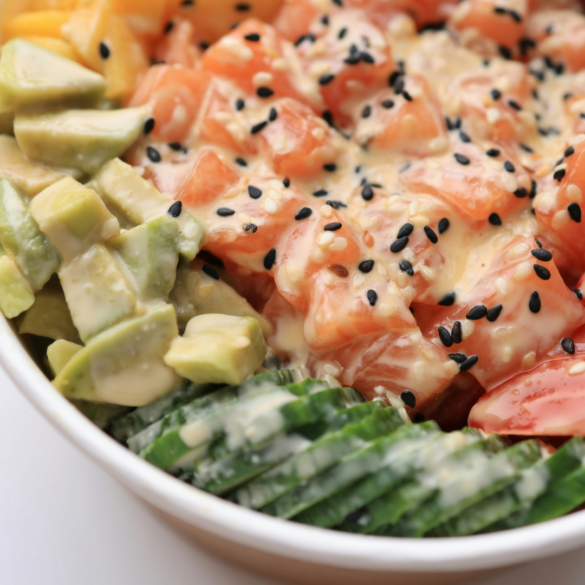
Ingredients
For the Salmon:
- 2 salmon fillets, skin on
- 1 tbsp olive oil
- 1 tsp garlic powder
- 1 tsp smoked paprika
- ½ tsp onion powder
- ½ tsp salt
- ¼ tsp black pepper
- Juice of ½ lemon
For the Salad Base:
- 2 large handfuls of mixed greens or baby spinach
- ½ cup cooked quinoa or brown rice.
- 1 large avocado, sliced
- 1 cup cucumber, thinly sliced
- 1 cup cherry tomatoes, halved
- ½ cup edamame beans, shelled
- ¼ red cabbage, thinly shredded
- 2 radishes, thinly sliced
- 2 spring onions, thinly sliced
- 1 tbsp sesame seeds, toasted
- Small handful of fresh coriander or parsley
For the Miso Ginger Dressing:
- 2 tbsp white miso paste
- 1 tbsp sesame oil
- 2 tbsp rice wine vinegar
- 1 tbsp soy sauce or tamari
- 1 tsp fresh ginger, grated
- 1 tsp honey or maple syrup
- 1–2 tbsp warm water
- Optional: 1 tsp sriracha
Instructions
- If you're adding a grain base to your bowl, start here since it takes the longest. Cook your quinoa or brown rice according to the packet instructions. Once cooked, fluff it with a fork, season lightly with salt, and set aside to cool slightly. You don't want it piping hot when you assemble the bowl or it'll wilt your greens.
- Add your miso paste, sesame oil, rice wine vinegar, soy sauce, grated ginger, and honey into a small bowl or jar. Whisk together until smooth — the miso can be a little stubborn at first so really work it in. Add warm water a little at a time until you reach a pourable consistency. Taste it and adjust — more honey if it needs sweetness, more vinegar if it needs sharpness, more soy if it needs salt. Set aside.
- While the dressing sits and the grains cool, prep everything else. Slice your cucumber, halve your cherry tomatoes, shred your red cabbage, slice your radishes and spring onions, dice your avocado, and thaw your edamame. Lay everything out ready to assemble — this is the part that makes the final bowl come together so quickly and easily.
- Pat your salmon fillets completely dry with kitchen paper — this is the single most important step for getting a crispy skin. Moisture is the enemy of a good sear. Mix your garlic powder, smoked paprika, onion powder, salt, and pepper together and rub the spice mix all over the flesh side of the salmon. Leave the skin bare.
- Heat your olive oil in a non-stick pan over medium-high heat until it's hot and shimmering. Place the salmon fillets skin-side down into the pan and press them gently with a spatula for the first 30 seconds to stop the skin from curling up. Cook skin-side down for 4–5 minutes without moving them — you want that skin to get properly golden and crispy. Flip and cook for a further 2–3 minutes on the flesh side until the salmon is just cooked through. It should still be slightly translucent in the very centre — that's perfectly safe and means it won't be dry. Squeeze your lemon juice over the top and remove from the heat.
- Start with your greens as the base. Add a scoop of quinoa or rice to one side if using. Arrange your cucumber, cherry tomatoes, edamame, shredded cabbage, radishes, and avocado around the bowl in sections — take a moment to think about colour placement. This is your bowl, make it look beautiful.
- Place your seared salmon fillet on top of the bowl — either whole with that gorgeous crispy skin facing up, or flaked into large chunks across the top. Both work brilliantly.
- Drizzle your miso ginger dressing generously over the whole bowl. Scatter your toasted sesame seeds, sliced spring onions, and fresh coriander or parsley over the top. Add a wedge of lemon