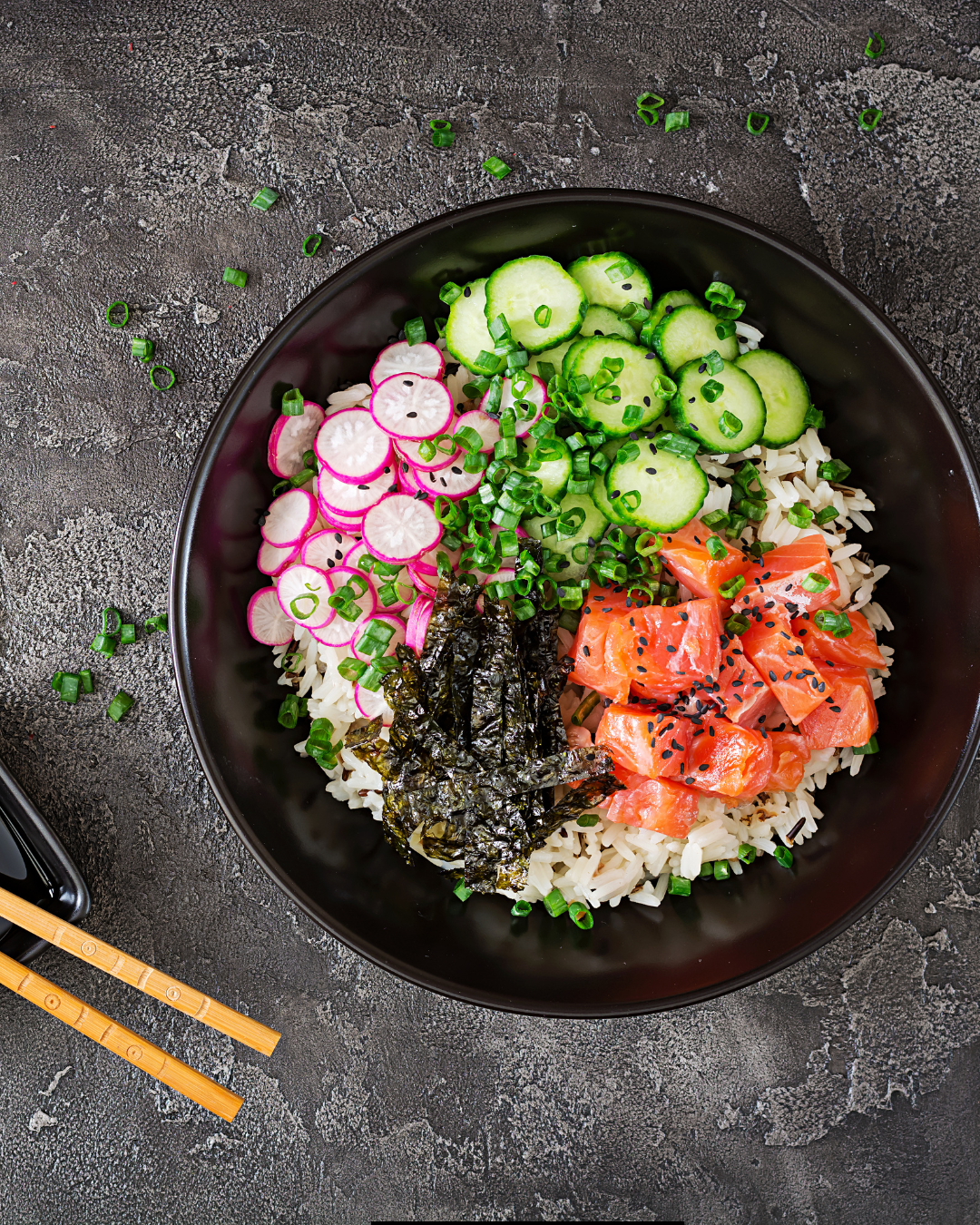
I’ll be honest — seaweed wasn’t always something I sought out in my own kitchen. I loved it at Japanese restaurants, I’d happily eat it wrapped around a piece of sushi or floating in a bowl of miso soup, but cooking with it at home felt like unfamiliar territory. Then one evening I threw together this Salmon Rice Bowl with Seaweed almost by accident — leftover rice, a salmon fillet that needed using, a packet of nori sitting in the back of the cupboard — and something just clicked. The combination was so clean, so deeply satisfying, so perfectly balanced that I made it again the very next night. And the night after that.
Table of Contents
How to make Salmon Rice Bowl with Seaweed
A Salmon Rice Bowl with Seaweed is a clean, beautifully minimal Japanese-inspired bowl that celebrates some of the ocean’s finest flavours all in one dish.
For the Salmon:
- 2 salmon fillets, skin on — skin-on fillets are non-negotiable here. That crispy, golden skin adds a texture contrast that makes the whole bowl more interesting and satisfying. Look for fillets of similar thickness so they cook evenly. Fresh is always the first choice but good quality frozen salmon fully thawed and thoroughly patted dry works beautifully too.
- 2 tbsp soy sauce — the savoury, umami-rich backbone of the marinade. It seasons the salmon deeply and helps it caramelise beautifully in the pan.
- 1 tbsp mirin — a sweet Japanese rice wine that adds a gentle sweetness and helps create that gorgeous lacquered glaze on the surface of the salmon. Find it at most supermarkets or Asian grocery stores — it’s worth having a bottle in the cupboard permanently.
- 1 tbsp sake or dry sherry — adds depth and a subtle complexity to the marinade. Sake is the authentic choice but dry sherry is a perfectly respectable substitute if sake isn’t available.
- 1 tsp sesame oil — nutty, aromatic, and very distinctly Japanese in character. Just a teaspoon is enough to perfume the whole marinade.
- 1 tsp honey — a small touch of sweetness that helps the salmon caramelise and develop those beautiful sticky, golden edges in the pan.
- 1 small garlic clove, grated — gentle background savouriness that weaves through the marinade without overpowering the delicate flavour of the fish.
- 1 tsp fresh ginger, grated — zingy and warming. Fresh ginger is essential here — dried doesn’t have the same brightness or aromatic quality.
- 1 tbsp neutral oil — for searing. Use something with a high smoke point like vegetable, sunflower, or avocado oil.
For the Sushi Rice:
- 1½ cups Japanese short-grain sushi rice — short-grain rice is stickier and more glutinous than long-grain varieties which makes it perfect for this bowl — it holds together beautifully and gives you that authentic Japanese texture. Rinse it thoroughly before cooking.
- 1¾ cups water — the precise ratio for perfectly cooked sushi rice. Too much water and it goes mushy, too little and it stays chalky. Measure carefully.
- 3 tbsp rice wine vinegar — the essential seasoning for sushi rice. It adds a clean, gentle tang that lifts the whole bowl and ties in beautifully with the Japanese flavours of the marinade and dressing.
- 1 tbsp sugar — dissolves into the rice wine vinegar to create the traditional sushi rice seasoning. Don’t skip it — it balances the acidity of the vinegar perfectly.
- 1 tsp salt — rounds out the sushi rice seasoning and brings everything into balance.
- Optional: 1 small piece of kombu — a dried kelp seaweed added to the rice cooking water that infuses a subtle, deeply savoury umami flavour into every grain of rice. Remove it before the water boils. This is a small touch that makes a genuinely noticeable difference — especially in a bowl where the seaweed is such a key flavour.
For the Seaweed:
- 2 sheets toasted nori — cut into thin strips or rough squares for laying over the bowl. Nori has a deep, savoury, slightly smoky flavour and a satisfying crunch when fresh that softens slightly as it absorbs moisture from the rice. Use scissors to cut it — much easier than a knife.
- 15g dried wakame seaweed — small, dark, and deeply oceanic in flavour. It rehydrates in cold water in just 5 minutes, expanding dramatically. Once rehydrated, drain it well, squeeze out the excess water, and season it simply with a little soy sauce, sesame oil, and rice wine vinegar. It adds a soft, silky, deeply savoury element that’s completely different in texture from the nori.
- 1 tbsp furikake seasoning — a Japanese rice seasoning blend that typically contains nori flakes, sesame seeds, dried fish flakes, and salt. Scattered generously over the assembled bowl it adds layers of savoury, oceanic, sesame flavour in one simple sprinkle. Find it at Asian supermarkets or online — once you have a jar in your kitchen you’ll put it on everything.
For the Bowl Toppings:
- 1 large avocado, sliced — the creamy, buttery counterpoint to all those clean, sharp Japanese flavours. It softens the bowl and adds a richness that makes everything feel more complete and satisfying.
- 1 cup cucumber, thinly sliced — cool, refreshing, and very clean in flavour. It echoes the freshness of the seaweed and provides a lovely textural contrast to the soft rice and flaky salmon.
- ½ cup edamame beans, shelled — sweet, slightly nutty, and a beautiful pop of bright green. Thaw frozen edamame under warm water or blanch briefly — no lengthy cooking required.
- 4 radishes, very thinly sliced — peppery, crisp, and visually stunning. Use a mandoline if you have one for paper-thin slices that are almost translucent in the bowl.
- 2 spring onions, thinly sliced — mild, fresh onion flavour that runs through every bite without overwhelming anything else.
- 1 soft-boiled egg per person — jammy, golden-yolked, and deeply satisfying. It adds richness and protein and makes the bowl feel genuinely complete. Cook for exactly 6 minutes in boiling water, then straight into ice-cold water.
- Pickled ginger — sharp, tangy, and very cleansing on the palate. It cuts through the richness of the salmon and avocado beautifully and adds an authentic Japanese touch that ties the whole bowl together.
- 1 tbsp toasted sesame seeds — the finishing touch. Nutty, crunchy, and visually beautiful scattered over the top of the assembled bowl.
- Fresh coriander or micro herbs — a small handful scattered over the top for a fresh, herby brightness that lifts the whole bowl visually and flavour-wise.
For the Ponzu Dressing:
- 3 tbsp soy sauce — the savoury backbone of the dressing.
- 2 tbsp fresh lemon juice — bright, sharp citrus that gives the dressing its clean, refreshing character. Fresh is essential here — bottled lemon juice doesn’t have the same brightness.
- 1 tbsp fresh lime juice — adds a slightly different, more floral citrus note alongside the lemon.
- 1 tbsp mirin — a touch of sweetness to balance the acidity and saltiness.
- 1 tsp sesame oil — nutty and aromatic. Just enough to add depth without making the dressing heavy.
- Optional: 1 tsp rice wine vinegar — for an extra layer of clean acidity if you like your dressing particularly sharp and bright.
Step by Step
- Start here because the wakame needs at least 5 minutes to rehydrate fully. Place your dried wakame in a bowl of cold water and set aside. It will expand significantly — much more than you’d expect from such a small amount of dried seaweed. While it soaks, get everything else started.
- Combine your soy sauce, fresh lemon and lime juice, mirin, sesame oil, and rice wine vinegar if using, in a small jar or bowl. Stir or shake well until combined. Taste it — it should be sharp, savoury, and bright with a gentle sweetness from the mirin running through it. Adjust as needed and set aside. Like all good dressings it gets better as it sits.
- Rinse your short-grain rice under cold running water, swirling it around with your hand until the water runs completely clear. This is particularly important with sushi rice — it has a higher starch content than other varieties and rinsing is essential for the right finished texture. Add the rinsed rice to a saucepan with your measured water and the kombu if using. Bring to the boil over medium heat, remove the kombu just before the water boils, then reduce immediately to the lowest heat setting, cover with a tight-fitting lid, and cook for 12 minutes without lifting the lid. After 12 minutes remove from the heat and steam, still covered, for a further 10 minutes.
- While the rice steams, mix your rice wine vinegar, sugar, and salt together in a small bowl and stir until the sugar and salt dissolve completely. Once the rice has finished steaming, transfer it to a wide, flat bowl or dish — a wooden bowl is traditional but any large bowl works. Pour the vinegar mixture over the warm rice and fold it through gently using a rice paddle or flat spatula in a slicing motion rather than stirring — you want to coat every grain without mashing them together. Fan the rice as you fold to cool it slightly and give it that characteristic glossy sheen. Cover with a damp cloth and keep at room temperature until ready to serve. Never refrigerate sushi rice — it turns hard and chalky.
- Drain your rehydrated wakame well and squeeze out as much excess water as you can with your hands. It should be soft, silky, and a beautiful deep green colour. Transfer to a small bowl and season with a little soy sauce, sesame oil, rice wine vinegar, and a pinch of sugar. Toss well to coat and set aside. Taste it — it should be savoury, slightly tangy, and deeply oceanic. Adjust seasoning as needed.
- Mix your soy sauce, mirin, sake, sesame oil, honey, grated garlic, and grated ginger together in a shallow dish. Add your salmon fillets flesh-side down and let them marinate for at least 15 minutes — longer if you have time. The longer it marinates the deeper the flavour penetration but even 15 minutes makes a very noticeable difference. Pat the skin side completely dry with kitchen paper before cooking — wet skin will not crisp up in the pan no matter how high the heat.
- Heat your neutral oil in a non-stick pan over medium-high heat until hot and shimmering. Place the salmon fillets skin-side down and press gently with a spatula for the first 30 seconds to prevent the skin from curling. Cook skin-side down for 4–5 minutes without moving them — trust the process and leave them completely alone. You’ll see the flesh gradually turning opaque from the bottom up which tells you exactly how far through the cooking has progressed. Flip and cook for a further 2–3 minutes on the flesh side until just cooked through with a very slight translucency remaining in the thickest part of the centre. Remove from the heat and rest for 2 minutes.
- If you haven’t already, bring a small saucepan of water to a rolling boil. Lower your eggs in gently using a spoon and cook for exactly 6 minutes for a perfectly jammy, golden yolk. Transfer immediately to a bowl of ice-cold water and leave for at least 5 minutes before peeling. Peel carefully — the white is slightly more delicate than a fully hard-boiled egg. Slice in half just before serving.
- Use a pair of clean kitchen scissors to cut your toasted nori sheets into thin strips or rough squares. Scissors are significantly easier and neater than a knife for this — they give you clean, precise cuts without tearing the nori. Set aside until the very last moment before serving as nori softens quickly once exposed to moisture.
- Spoon a generous portion of seasoned sushi rice into each bowl and press it very slightly to create a stable, flat base. Arrange your seasoned wakame, sliced cucumber, edamame, radishes, and avocado around the bowl in neat sections — think about colour and contrast as you place each component. Lay your nori strips across the Salmon Rice Bowl. Place your salmon fillet on top — whole with the crispy skin facing up for maximum visual impact, or flaked into large generous chunks if you prefer. Nestle your halved soft-boiled egg alongside the salmon.
- Drizzle your ponzu dressing over the whole Salmon Rice Bowl— be generous but not overwhelming. Scatter your furikake seasoning, toasted sesame seeds, sliced spring onions, pickled ginger, and fresh coriander or micro herbs over the top. Serve immediately while the salmon and rice are still warm and the nori still has some of its crunch.
Tips That’ll Make This Salmon Rice Bowl Genuinely Extraordinary
- Use proper Japanese short-grain rice. It makes a genuinely significant difference to the texture and eating experience of this bowl. Long-grain rice or basmati doesn’t have the right stickiness or flavour for a Japanese-style Salmon Rice Bowl. Look for bags labelled sushi rice or Japanese short-grain rice — most supermarkets stock it.
- Season your sushi rice while it’s still warm. Warm rice absorbs the vinegar seasoning beautifully — the grains are open and receptive. Cold rice won’t absorb the seasoning effectively and you’ll end up with vinegary surface rice and bland grains underneath. Fold the seasoning in as soon as the rice comes off the heat.
- Never refrigerate your sushi rice. Cold kills sushi rice completely — it turns hard, chalky, and completely unpleasant. Keep it covered with a damp cloth at room temperature and use it the same day you make it.
- Add kombu to the rice cooking water. This is the tip that separates a good Salmon Rice Bowl from a truly exceptional one. That small piece of dried kombu infuses a subtle but deep umami flavour into every grain of rice that you can’t quite put your finger on but absolutely notice when it’s there. Find it at Asian supermarkets — a packet lasts for ages.
- Don’t over-marinate the salmon. Unlike meat, fish is delicate and the salt and acid in the marinade will start to break down the proteins if left too long. Fifteen minutes to one hour is the sweet spot — longer than that and the texture of the fish starts to change in a way that isn’t desirable.
- Pat the salmon skin completely dry before searing. Any moisture on the skin will create steam in the pan and prevent the skin from crisping up. Pat it dry after marinating, just before it goes into the pan, and the skin will turn golden and crispy in a way that makes the whole Salmon Rice Bowl feel very special.
- Add the nori at the very last second. Nori absorbs moisture incredibly quickly and goes from wonderfully crisp to completely soft and chewy in just a few minutes once it comes into contact with the warm rice and dressing. Cut it, lay it over the Salmon Rice Bowl, and serve immediately. If you’re making this for a group, keep the nori separate and let people add it themselves at the table.
- Use a mandoline for the radishes. Paper-thin radish slices look absolutely stunning in this Salmon Rice Bowl— almost translucent, with that beautiful pink edge. A mandoline gets you there in seconds. If you don’t have one, slice as thinly as you possibly can with a sharp knife.
- Make the ponzu dressing ahead. It keeps in the fridge for up to a week and genuinely improves over time as the flavours meld and deepen. Make a bigger batch and use it as a dipping sauce, a salad dressing, or a drizzle over any cooked fish throughout the week.
Final Thoughts
This Salmon Rice Bowl with Seaweed is the kind of meal that makes you genuinely proud of yourself in the kitchen — not because it’s technically difficult, because it really isn’t, but because the result is so clean, so considered, and so deeply delicious that it feels like far more than the sum of its parts.
More Rice Recipes:
Ingredients
For the Salmon:
- 2 salmon fillets, skin on
- 2 tbsp soy sauce
- 1 tbsp mirin
- 1 tbsp sake or dry sherry
- 1 tsp sesame oil
- 1 tsp honey
- 1 small garlic clove, grated
- 1 tsp fresh ginger, grated
- 1 tbsp neutral oil
For the Sushi Rice:
- 1½ cups Japanese short-grain sushi rice
- 1¾ cups water
- 3 tbsp rice wine vinegar
- 1 tbsp sugar
- 1 tsp salt
- Optional: 1 small piece of kombu
For the Seaweed:
- 2 sheets toasted nori
- 15g dried wakame seaweed
- 1 tbsp furikake seasoning
For the Bowl Toppings:
- 1 large avocado, sliced
- 1 cup cucumber, thinly sliced
- ½ cup edamame beans, shelled
- 4 radishes, very thinly sliced
- 2 spring onions, thinly sliced
- 1 soft-boiled egg per person
- Pickled ginger
- 1 tbsp toasted sesame seeds
- Fresh coriander or micro herbs
For the Ponzu Dressing:
- 3 tbsp soy sauce
- 2 tbsp fresh lemon juice
- 1 tbsp fresh lime juice
- 1 tbsp mirin
- 1 tsp sesame oil
- Optional: 1 tsp rice wine vinegar
Instructions
- Start here because the wakame needs at least 5 minutes to rehydrate fully. Place your dried wakame in a bowl of cold water and set aside. It will expand significantly — much more than you'd expect from such a small amount of dried seaweed. While it soaks, get everything else started.
- Combine your soy sauce, fresh lemon and lime juice, mirin, sesame oil, and rice wine vinegar if using, in a small jar or bowl. Stir or shake well until combined. Taste it — it should be sharp, savoury, and bright with a gentle sweetness from the mirin running through it. Adjust as needed and set aside. Like all good dressings it gets better as it sits.
- Rinse your short-grain rice under cold running water, swirling it around with your hand until the water runs completely clear. This is particularly important with sushi rice — it has a higher starch content than other varieties and rinsing is essential for the right finished texture. Add the rinsed rice to a saucepan with your measured water and the kombu if using. Bring to the boil over medium heat, remove the kombu just before the water boils, then reduce immediately to the lowest heat setting, cover with a tight-fitting lid, and cook for 12 minutes without lifting the lid. After 12 minutes remove from the heat and steam, still covered, for a further 10 minutes.
- While the rice steams, mix your rice wine vinegar, sugar, and salt together in a small bowl and stir until the sugar and salt dissolve completely. Once the rice has finished steaming, transfer it to a wide, flat bowl or dish — a wooden bowl is traditional but any large bowl works. Pour the vinegar mixture over the warm rice and fold it through gently using a rice paddle or flat spatula in a slicing motion rather than stirring — you want to coat every grain without mashing them together. Fan the rice as you fold to cool it slightly and give it that characteristic glossy sheen. Cover with a damp cloth and keep at room temperature until ready to serve. Never refrigerate sushi rice — it turns hard and chalky.
- Drain your rehydrated wakame well and squeeze out as much excess water as you can with your hands. It should be soft, silky, and a beautiful deep green colour. Transfer to a small bowl and season with a little soy sauce, sesame oil, rice wine vinegar, and a pinch of sugar. Toss well to coat and set aside. Taste it — it should be savoury, slightly tangy, and deeply oceanic. Adjust seasoning as needed.
- Mix your soy sauce, mirin, sake, sesame oil, honey, grated garlic, and grated ginger together in a shallow dish. Add your salmon fillets flesh-side down and let them marinate for at least 15 minutes — longer if you have time. The longer it marinates the deeper the flavour penetration but even 15 minutes makes a very noticeable difference. Pat the skin side completely dry with kitchen paper before cooking — wet skin will not crisp up in the pan no matter how high the heat.
- Heat your neutral oil in a non-stick pan over medium-high heat until hot and shimmering. Place the salmon fillets skin-side down and press gently with a spatula for the first 30 seconds to prevent the skin from curling. Cook skin-side down for 4–5 minutes without moving them — trust the process and leave them completely alone. You'll see the flesh gradually turning opaque from the bottom up which tells you exactly how far through the cooking has progressed. Flip and cook for a further 2–3 minutes on the flesh side until just cooked through with a very slight translucency remaining in the thickest part of the centre. Remove from the heat and rest for 2 minutes.
- If you haven't already, bring a small saucepan of water to a rolling boil. Lower your eggs in gently using a spoon and cook for exactly 6 minutes for a perfectly jammy, golden yolk. Transfer immediately to a bowl of ice-cold water and leave for at least 5 minutes before peeling. Peel carefully — the white is slightly more delicate than a fully hard-boiled egg. Slice in half just before serving.
- Use a pair of clean kitchen scissors to cut your toasted nori sheets into thin strips or rough squares. Scissors are significantly easier and neater than a knife for this — they give you clean, precise cuts without tearing the nori. Set aside until the very last moment before serving as nori softens quickly once exposed to moisture.
- Spoon a generous portion of seasoned sushi rice into each bowl and press it very slightly to create a stable, flat base. Arrange your seasoned wakame, sliced cucumber, edamame, radishes, and avocado around the bowl in neat sections — think about colour and contrast as you place each component. Lay your nori strips across the Salmon Rice Bowl. Place your salmon fillet on top — whole with the crispy skin facing up for maximum visual impact, or flaked into large generous chunks if you prefer. Nestle your halved soft-boiled egg alongside the salmon.
- Drizzle your ponzu dressing over the whole Salmon Rice Bowl— be generous but not overwhelming. Scatter your furikake seasoning, toasted sesame seeds, sliced spring onions, pickled ginger, and fresh coriander or micro herbs over the top. Serve immediately while the salmon and rice are still warm and the nori still has some of its crunch.