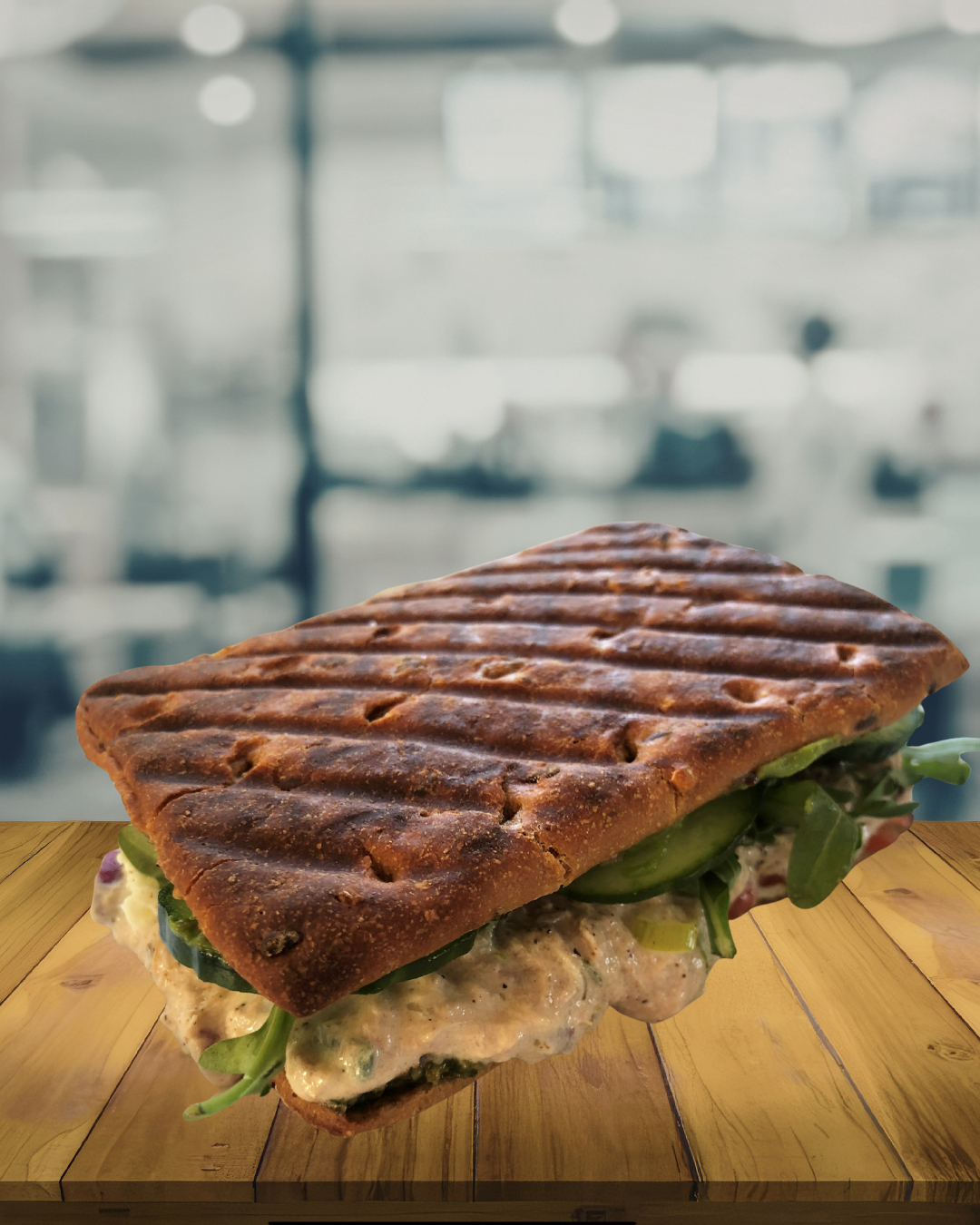
When I started craving Joe & The Juice sandwiches (again) but didn’t fancy walking to their shop, I thought, “Why not give it a go at home?” After some experimenting and a bit of trial and error, I’ve honed a copycat recipe for Joe and The Juice bread that gets surprisingly close to the real thing.
Table of Contents
How to make Joe and the Juice Bread
Joe and the Juice bread is a thin, wheat-based flatbread used by Joe & the Juice, typically pressed and toasted to create a light, crispy exterior with a soft interior, forming the base for their signature sandwiches.
Ingredients
Dry Ingredients
- 250 g strong white bread flour
- 200 g wholemeal/wholewheat bread flour
- 25 g oat bran or wheat bran (for fibre – optional but recommended)
- 7 g fast‑action dried yeast (1 standard UK sachet)
- 10 g fine sea salt (about 1½ tsp)
- 10 g sugar or runny honey (about 2 tsp – helps browning and flavour)
Wet Ingredients
- 320–350 ml warm water (about body temperature, 35–40°C)
- 25 ml olive oil (about 2 tbsp)
- Optional: 15–20 ml milk or plant milk (1–1½ tbsp) for a slightly softer crumb
For Finishing
- A little extra olive oil for brushing
- Fine sea salt to sprinkle (optional)
- Optional: a pinch of garlic powder or dried oregano if you want a lightly flavoured “Italian” style bread
Instructions
Step 1: Activate and Mix
- In a large bowl, mix:
- Strong white flour
- Wholemeal flour
- Oat/wheat bran
- Yeast
- Sugar
- Salt (add it on a different side of the bowl from the yeast initially)
- In a jug, combine:
- 320 ml warm water
- Olive oil
- (Optional) Milk/plant milk
- Pour the wet mix into the dry ingredients.
- Stir with a spoon or your hand until no dry patches remain.
- The dough should be soft and slightly sticky. If it is very stiff, add 1 tbsp water at a time (up to about 30 ml extra) until it loosens.
Step 2: Knead
- You can knead by hand or with a stand mixer.
- By hand:
- Lightly oil your work surface (oil works better than flour for sticky doughs and keeps the crumb soft).
- Tip the dough out and knead for 8–10 minutes:
- Stretch, fold over, turn, and repeat.
- It will start sticky but should become smoother and more elastic.
- By stand mixer:
- Use a dough hook on low–medium speed.
- Mix for 6–8 minutes, scraping down the sides as needed.
- Stop when the dough is smooth and springs back when poked.
- By hand:
- You’re looking for a dough that is:
- Smooth and elastic
- Soft and slightly tacky, but not gluey
Step 3: First Rise (Bulk Fermentation)
- Lightly oil the bowl. Place the dough back inside and turn it to coat.
- Cover with a damp tea towel or cling film.
- Leave in a warm, draught‑free spot for 60–90 minutes, or until roughly doubled in size.
- If your kitchen is cool, it might take longer (up to 2 hours). That’s fine—flavour improves with a slower rise.
Step 4: Shape the Breads
- Once doubled, gently deflate the dough with your hands (don’t punch it aggressively, press out the gas).
- Tip onto a lightly oiled or lightly floured surface.
- Divide into 6–8 equal pieces:
- 6 pieces for slightly larger breads
- 8 pieces for smaller, snack‑size breads
- Each piece should be about 90–110 g.
- Shape each piece into a rough ball, then flatten with your palm.
- Using your fingers or a rolling pin, press/roll each piece into a thin oval or rectangle, about:
- 0.5–1 cm thick
- Approximately 10 x 15 cm (for a classic sandwich size)
- Aim for even thickness so they cook uniformly.
Step 5: Second Rise (Proofing the Flatbreads)
- Place the shaped breads on a parchment‑lined baking tray.
- Lightly brush the tops with a bit of olive oil to prevent drying.
- Cover loosely with cling film or a damp tea towel.
- Let them rest/rise for 20–30 minutes.
- They won’t puff massively, but they should relax and look slightly lighter.
- Meanwhile, preheat your oven to 220°C (200°C fan) / 425°F / Gas 7.
Step 6: Bake
- Optional: Lightly brush again with olive oil and sprinkle a pinch of salt on top.
- Bake in the preheated oven for 8–12 minutes:
- They should puff slightly and get a light golden colour.
- The base should be dry and set, not doughy.
- You’re not baking them to a dark crust; they should be relatively pale so they can later be toasted in a panini press without over‑browning.
- Remove and cool on a wire rack.
- At this stage, they’ll taste like soft flatbreads.
Step 7: Toasting Like Joe & The Juice
- To get that signature toasted, slightly pressed texture:
- Heat a sandwich press, griddle pan, or non‑stick frying pan over medium‑high heat.
- Slice the bread horizontally (like a sandwich bun) if you want a proper “pocket” for filling.
- Assemble your sandwich (tuna, avocado, pesto, turkey, etc.).
- Toast in the press/pan:
- In a sandwich press: 3–5 minutes until the bread is crisp on the outside and warmed through.
- In a pan, press down with a spatula or another heavy pan and toast each side 2–3 minutes.
- The bread should come out crispy on the outside, soft and chewy inside – very similar to what you get in the shop.
Ingredients Substitutes
The goal is to mimic the texture and flavour: light, chewy, fibre-rich, and ideal for sandwich fillings.
1. Strong White Bread Flour
Purpose: This provides strength and elasticity in the dough, making it light and chewy after baking.
Substitutes:
- Plain White Flour: Works, but results in a softer texture (less chewy). Add 1 tsp of vital wheat gluten per 100 g of flour to replicate the strength of bread flour.
- All-Purpose Flour (US): Similar to plain white flour. For improved structure, mix 75% all-purpose flour with 25% wholemeal flour.
- Spelt Flour: A softer, nuttier option. Replace only 25–50% of the bread flour with spelt for a lighter texture.
2. Wholemeal / Wholewheat Bread Flour
Purpose: Adds fibre and nuttiness, creating the wholesome flavour typical of Joe and The Juice bread.
Substitutes:
- Wholemeal Plain Flour: Similar texture and fibre but weaker gluten structure compared to bread flour. Results in slightly denser Joe and The Juice bread.
- Rye Flour: Adds a rustic, deeper flavour. Replace up to 50% of the wholemeal flour for an earthy, chewy Joe and The Juice bread.
- Oat Flour: Gluten-free alternative with sweetness. Use 25% oat flour mixed with gluten-free flour or strong white bread flour for a balanced texture.
- Buckwheat Flour: Nutty and earthy flavour. Mix up to 50% buckwheat flour with a stronger flour (like bread flour) to maintain texture.
3. Oat Bran or Wheat Bran
Purpose: Extra fibre for texture and nutrition. It helps replicate the hearty feel of Joe & The Juice bread.
Substitutes:
- Ground Flaxseed (Linseed): Adds fibre and omega-3. Replace bran directly with ground flaxseed for a similar wholesome quality.
- Porridge Oats (finely ground): Blend oats into a flour-like consistency. Replace brand measure for measure.
- Chia Seeds (ground): Offers fibre and bulk. Mix ground chia seeds into the dry ingredients at the same volume.
- Psyllium Husk Powder: A fibre-rich option, often used in gluten-free bread. Use less—about 10 g for every 25 g of bran.
4. Fast-Action Yeast
Purpose: Ensures the dough rises to produce light, airy bread.
Substitutes:
- Active Dry Yeast: Same result, but requires activation: Dissolve the yeast in warm water with the sugar and let sit for 5–10 minutes until frothy before adding to the flour.
- Fresh Yeast: Use 3× the weight of dried yeast. Crumble into the flour, or dissolve in liquid first.
- Sourdough Starter: For a complex, tangy flavour. Replace the yeast with 150 g of active sourdough starter (and reduce the water slightly). Allow longer proofing times (4–6 hrs).
- Skipping yeast altogether: Use self-raising wholemeal flour and leave out yeast entirely. The result will be more like soda bread (denser, less chewy).
5. Sugar / Honey
Purpose: A mild sweetness for flavour and colour during baking.
Substitutes:
- Maple Syrup: Similar sweetness; replace on a 1:1 basis.
- Agave Syrup: Same ratio, slightly less sweetness and more neutral in flavour.
- Brown Sugar: Adds a richer, molasses-like depth (slightly darker bread).
- Coconut Sugar: A natural sweetener with caramel notes; use at a 1:1 ratio.
- Stevia Powder / Erythritol: Low-calorie substitutes. Use sparingly—a pinch is usually enough.
- Skip sugar/honey entirely: The bread will bake paler, but the flavour can still shine through fillings.
Final Thoughts
Using these substitutes will let you adapt the recipe while still achieving a texture and taste close to Joe and The Juice bread.
More Recipes:
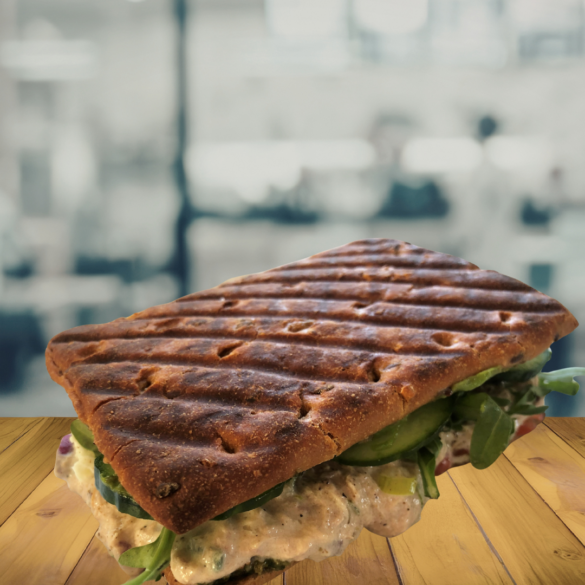
Ingredients
Dry Ingredients
- 250 g strong white bread flour
- 200 g wholemeal/wholewheat bread flour
- 25 g oat bran or wheat bran
- 7 g fast‑action dried yeast
- 10 g fine sea salt (about 1½ tsp)
- 10 g sugar or runny honey
Wet Ingredients
- 320–350 ml warm water
- 25 ml olive oil (about 2 tbsp)
- Optional: 15–20 ml milk
For Finishing
- A little extra olive oil for brushing
- Fine sea salt to sprinkle (optional)
- Optional: a pinch of garlic powder
Instructions
Step 1: Activate and Mix
- In a large bowl, mix:
- Strong white flour
- Wholemeal flour
- Oat/wheat bran
- Yeast
- Sugar
- Salt (add it on a different side of the bowl from the yeast initially)
- In a jug, combine:
- 320 ml warm water
- Olive oil
- (Optional) Milk/plant milk
- Pour the wet mix into the dry ingredients.
- Stir with a spoon or your hand until no dry patches remain.
- The dough should be soft and slightly sticky. If it is very stiff, add 1 tbsp water at a time (up to about 30 ml extra) until it loosens.
Step 2: Knead
- You can knead by hand or with a stand mixer.
- By hand:
- Lightly oil your work surface (oil works better than flour for sticky doughs and keeps the crumb soft).
- Tip the dough out and knead for 8–10 minutes:
- Stretch, fold over, turn, and repeat.
- It will start sticky but should become smoother and more elastic.
- By stand mixer:
- Use a dough hook on low–medium speed.
- Mix for 6–8 minutes, scraping down the sides as needed.
- Stop when the dough is smooth and springs back when poked.
- By hand:
- You’re looking for a dough that is:
- Smooth and elastic
- Soft and slightly tacky, but not gluey
Step 3: First Rise (Bulk Fermentation)
- Lightly oil the bowl. Place the dough back inside and turn it to coat.
- Cover with a damp tea towel or cling film.
- Leave in a warm, draught‑free spot for 60–90 minutes, or until roughly doubled in size.
- If your kitchen is cool, it might take longer (up to 2 hours). That’s fine—flavour improves with a slower rise.
Step 4: Shape the Breads
- Once doubled, gently deflate the dough with your hands (don’t punch it aggressively, press out the gas).
- Tip onto a lightly oiled or lightly floured surface.
- Divide into 6–8 equal pieces:
- 6 pieces for slightly larger breads
- 8 pieces for smaller, snack‑size breads
- Each piece should be about 90–110 g.
- Shape each piece into a rough ball, then flatten with your palm.
- Using your fingers or a rolling pin, press/roll each piece into a thin oval or rectangle, about:
- 0.5–1 cm thick
- Approximately 10 x 15 cm (for a classic sandwich size)
- Aim for even thickness so they cook uniformly.
Step 5: Second Rise (Proofing the Flatbreads)
- Place the shaped breads on a parchment‑lined baking tray.
- Lightly brush the tops with a bit of olive oil to prevent drying.
- Cover loosely with cling film or a damp tea towel.
- Let them rest/rise for 20–30 minutes.
- They won’t puff massively, but they should relax and look slightly lighter.
- Meanwhile, preheat your oven to 220°C (200°C fan) / 425°F / Gas 7.
Step 6: Bake
- Optional: Lightly brush again with olive oil and sprinkle a pinch of salt on top.
- Bake in the preheated oven for 8–12 minutes:
- They should puff slightly and get a light golden colour.
- The base should be dry and set, not doughy.
- You’re not baking them to a dark crust; they should be relatively pale so they can later be toasted in a panini press without over‑browning.
- Remove and cool on a wire rack.
- At this stage, they’ll taste like soft flatbreads.
Step 7: Toasting Like Joe & The Juice
- To get that signature toasted, slightly pressed texture:
- Heat a sandwich press, griddle pan, or non‑stick frying pan over medium‑high heat.
- Slice the bread horizontally (like a sandwich bun) if you want a proper “pocket” for filling.
- Assemble your sandwich (tuna, avocado, pesto, turkey, etc.).
- Toast in the press/pan:
- In a sandwich press: 3–5 minutes until the bread is crisp on the outside and warmed through.
- In a pan, press down with a spatula or another heavy pan and toast each side 2–3 minutes.
- The bread should come out crispy on the outside, soft and chewy inside – very similar to what you get in the shop.