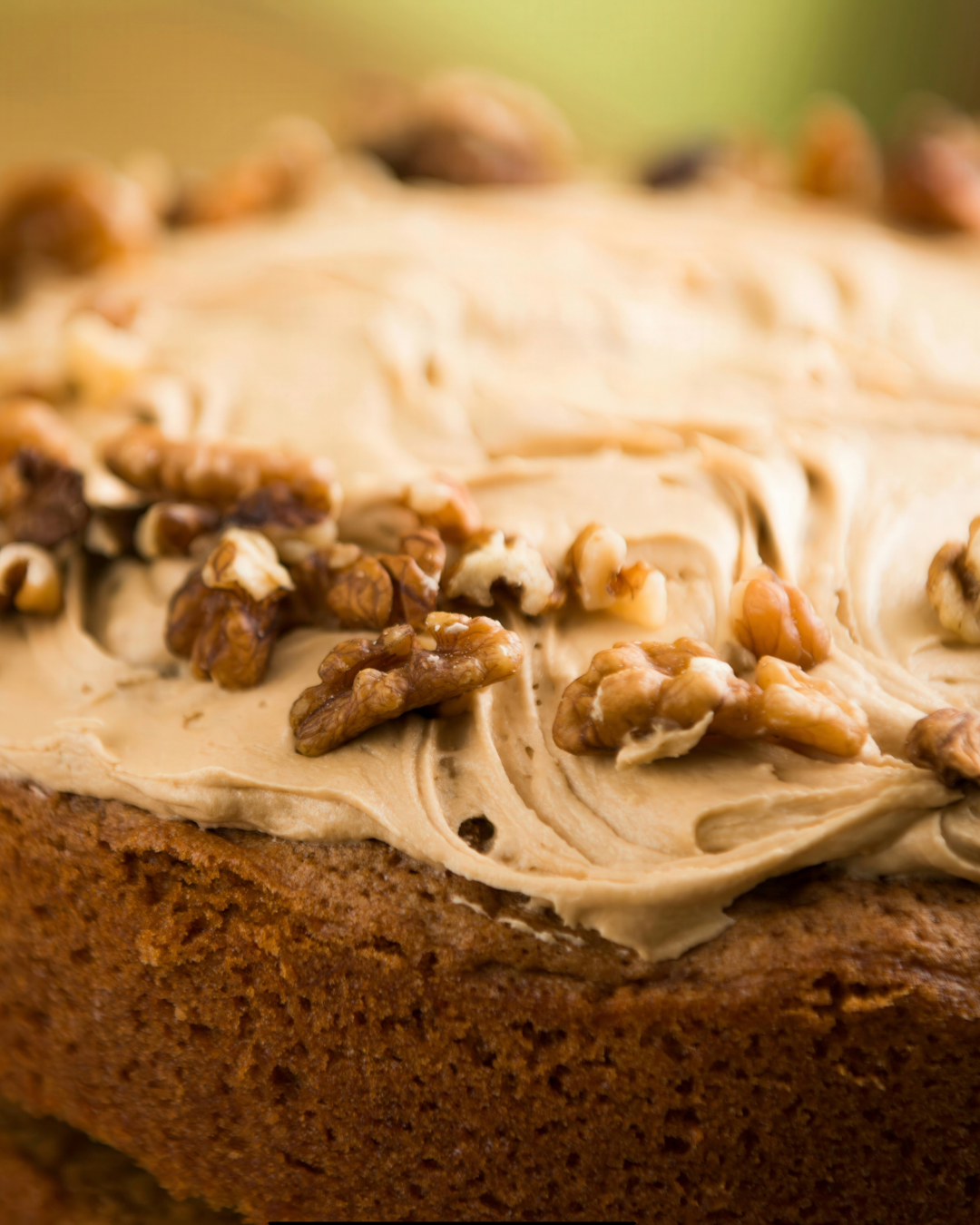
I’m always drawn to recipes that strike the right balance between flavour and ease – and this Mary Berry’s Coffee and Walnut Cake recipe ticks every box. Plus, who better to learn from than the Queen of Cakes herself?
Table of Contents
How to make Mary Berry’s Coffee and Walnut Cake
Mary Berry’s Coffee and Walnut Cake is a classic British layer cake popularised by Mary Berry, known for her simple, reliable baking recipes.
Ingredients
For the sponge cake:
- 100g (4oz) unsalted butter, softened
- 100g (4oz) caster sugar
- 100g (4oz) self-raising flour
- 1 tsp baking powder
- 2 large free-range eggs
- 50g (2oz) walnuts, finely chopped
- 1 tbsp instant coffee granules, dissolved in 1 tbsp boiling water
For the coffee buttercream icing:
- 75g (3oz) unsalted butter, softened
- 225g (8oz) icing sugar, sifted
- 2 tsp instant coffee granules, dissolved in 1 tbsp boiling water
- 8-12 walnut halves for the top
Instructions
- Preheat your oven to 180°C / 160°C fan / Gas Mark 4. Grease and line the bases of two 20cm (8-inch) round cake tins with parchment paper.
- In a large mixing bowl, combine the softened butter, caster sugar, self-raising flour, baking powder, eggs, and dissolved coffee. Mary Berry’s “all-in-one” method makes it incredibly easy – everything goes in at once!
- Beat the mixture using an electric whisk (or a wooden spoon, if you prefer) until smooth and creamy.
- Gently fold in the finely chopped walnuts with a spoon or spatula. Be careful not to overmix so you don’t knock out the air in your batter.
- Divide the batter evenly between the two prepared tins. Use the back of a spoon to level out the tops.
- Bake in the preheated oven for approximately 20–25 minutes or until the cakes are golden brown and spring back when lightly pressed. A skewer inserted into the centre should come out clean.
- Remove the cakes from the oven and let them cool in the tins for 5 minutes. Then, transfer the cakes onto a wire rack to cool completely.
- In a medium bowl, beat the softened butter until light and fluffy.
- Gradually add the sifted icing sugar, beating well after each addition.
- Add the dissolved coffee and continue whisking until the icing is smooth and creamy. You’re aiming for a spreadable consistency.
- Place one sponge cake layer on a serving plate or cake stand. Spread a generous amount of coffee buttercream over the top.
- Place the second sponge on top, pressing down gently to ensure it’s even.
- Spread the remaining buttercream over the top layer of the cake. You can also add a thin layer along the sides, if you prefer.
- Arrange walnut halves on top of the cake for a classic look. You can add your own creative twist by sprinkling chopped walnuts, dusting with cocoa powder or drizzling with melted chocolate!
Top Tips for Perfect Coffee and Walnut Cake
- Use Room Temperature Ingredients: For a lighter, fluffier sponge and smooth buttercream, make sure your butter and eggs are at room temperature.
- Don’t Skip the Coffee Dissolution: Dissolving the coffee granules in boiling water ensures even flavour distribution and avoids a gritty texture.
- Level Your Batter: Spreading the batter evenly in the tins ensures your cakes bake to an even height.
- Test Your Cakes: Start checking your cakes a few minutes before the timer. Every oven is different, so you don’t want a dry sponge.
- Cool Completely Before Icing: Warm cakes can cause the buttercream to melt, so be patient. Let them fully cool!
- Make Ahead: You can bake the sponges the day before. Wrap them tightly in cling film and store at room temperature until you’re ready to assemble.
- Storage: Store the cake in an airtight container for up to 3 days. If it’s particularly warm, refrigerate it, then let it come to room temperature before serving.
Ingredients Substitutes
Sometimes you want to make a cake but realise you’re missing an ingredient, or maybe you’re catering to dietary restrictions and need alternatives. Fear not! Mary Berry’s Coffee and Walnut Cake is versatile enough to accommodate substitutions without compromising its flavour and texture.
Sponge Ingredients Substitutes
1. Unsalted Butter (100g)
Butter is a key ingredient in the sponge for richness and moisture. If you’re out of butter or need a dairy-free option, try these alternatives:
- Margarine or Baking Spread (e.g., Stork): A like-for-like substitute that creates a light sponge. Great for those on a budget.
- Coconut Oil: Use the same amount (100g), but pick refined coconut oil to avoid a strong coconut flavour.
- Vegetable or Sunflower Oil: Substitute 80g of butter with 60ml (4 tbsp) of oil for a slightly lighter texture.
- Dairy-Free Butter: Perfect for vegans or those with lactose intolerance. Use a plant-based margarine, such as Flora Plant Butter or Vitalite.
2. Caster Sugar (100g)
Caster sugar is essential for sweetness and creating a tender crumb. If you don’t have it or want to adjust the Mary Berry’s Coffee and Walnut Cake recipe, here are some options:
- Granulated Sugar: This works as a direct swap, but crush it slightly to make it finer for better mixing.
- Light Brown Sugar: Adds a hint of caramel flavour, enhancing the walnut and coffee tones.
- Coconut Sugar: For a healthier option with a slightly deeper flavour, substitute in equal amounts.
- Sugar Substitutes (e.g., Stevia, Erythritol): For a reduced-sugar version, use an equivalent amount of a sugar substitute suitable for baking. Always check packaging for conversion ratios.
3. Self-Raising Flour (100g)
Self-raising flour ensures the Mary Berry’s Coffee and Walnut Cake rises properly. Out of self-raising flour or need gluten-free options? Here are your choices:
- Plain Flour + Raising Agents: Combine 100g of plain flour with 1 tsp of baking powder. Sift together for even distribution.
- Wholemeal Self-Raising Flour: Adds a nuttier taste and extra fibre. Great for a rustic twist.
- Gluten-Free Self-Raising Flour: Works perfectly for coeliacs. Brands like Doves Farm or Freee are excellent.
4. Baking Powder (1 tsp)
If you don’t have baking powder on hand, you can make your own:
- DIY Baking Powder: Mix 1/2 tsp of cream of tartar with 1/4 tsp of bicarbonate of soda. This equals 1 tsp of baking powder.
5. Eggs (2 large)
Eggs provide structure and richness. For egg-free alternatives, try these substitutes (use one per egg):
- Unsweetened Applesauce: Use 4 tbsp (60ml) of applesauce. Works well for spongy cakes.
- Mashed Banana: 1/2 a ripe banana, mashed, makes a great binder and adds sweetness.
- Ground Flaxseed (“Flax Egg”): Mix 1 tbsp of ground flaxseed with 2.5 tbsp of water; let it sit for 5 minutes to thicken.
- Aquafaba: Use 3 tbsp of chickpea water per egg. Whisk for best results.
- Yoghurt (Dairy or Vegan): 60g plain yoghurt creates moisture and acts as a binder.
6. Walnuts (50g, chopped)
Walnuts are key to the classic Mary Berry’s Coffee and Walnut Cake recipe’s texture and flavour, but you can swap them easily:
- Pecans: Offer a similar nutty crunch and buttery flavour.
- Hazelnuts: Add a slightly sweeter, richer taste.
- Almonds (Slivered or Chopped): Give a subtle nutty flavour.
- Sunflower Seeds or Pumpkin Seeds: Excellent nut-free alternatives for people with allergies. Toast them lightly for extra flavour.
- No Nuts: Omit the nuts for a plain coffee sponge – it’s still delicious!
7. Coffee Granules (1 tbsp, dissolved)
Coffee is the star ingredient, and its richness is crucial. Here’s how to adapt:
- Instant Espresso Powder: Swap the granules for an equivalent amount of espresso powder for an even bolder flavour.
- Strong Brewed Coffee: Use 1 tbsp of very strong liquid coffee instead of dissolving granules.
- Coffee Essence: A small amount (1 tsp) of concentrated coffee essence works wonderfully.
- Decaf Coffee: Perfect for those who want the flavour without the caffeine.
Buttercream Ingredients Substitutes
1. Unsalted Butter (75g)
For the buttercream, use these substitutes if needed:
- Dairy-Free Butter (Baking Margarine): Works just as well for vegans. Slightly softer, so chill the buttercream if needed.
- Coconut Oil: Use refined coconut oil for a dairy-free and creamy option.
2. Icing Sugar (225g)
To replace icing sugar:
- Granulated Sugar (Blended): Blend granulated sugar in a food processor until fine.
- Powdered Erythritol: A sugar-free option for the same weight. Perfect for low-sugar diets.
3. Coffee Granules (2 tsp, dissolved)
The coffee in the buttercream can also be swapped out or adjusted:
- Espresso Powder: A direct swap for richer flavour.
- Brewed Coffee: Use 1 tbsp of strong brewed coffee, but add it gradually to avoid making the buttercream too runny.
- Flavoured Coffee: Add a flavoured coffee granule (e.g., vanilla or hazelnut) for a modern twist.
Final Thoughts
Mary Berry’s Coffee and Walnut Cake isn’t just delicious; it’s nostalgic for many Brits. The rich coffee flavour, paired with the nutty crunch of walnuts and the creamy sweetness of buttercream, makes it a true classic.
More Mary Berry’s Recipes:
- Copycat Mary Berry’s Parsnip Soup Recipe
- Copycat Mary Berry’s Soda Bread Recipe
- Copycat Mary Berry’s Coronation Chicken Recipe
Ingredients
For the sponge cake:
- 100g (4oz) unsalted butter, softened
- 100g (4oz) caster sugar
- 100g (4oz) self-raising flour
- 1 tsp baking powder
- 2 large free-range eggs
- 50g (2oz) walnuts, finely chopped
- 1 tbsp instant coffee granules, dissolved in 1 tbsp boiling water
For the coffee buttercream icing:
- 75g (3oz) unsalted butter, softened
- 225g (8oz) icing sugar, sifted
- 2 tsp instant coffee granules, dissolved in 1 tbsp boiling water
- 8-12 walnut halves for the top
Instructions
- Preheat your oven to 180°C / 160°C fan / Gas Mark 4. Grease and line the bases of two 20cm (8-inch) round cake tins with parchment paper.
- In a large mixing bowl, combine the softened butter, caster sugar, self-raising flour, baking powder, eggs, and dissolved coffee. Mary Berry’s "all-in-one" method makes it incredibly easy – everything goes in at once!
- Beat the mixture using an electric whisk (or a wooden spoon, if you prefer) until smooth and creamy.
- Gently fold in the finely chopped walnuts with a spoon or spatula. Be careful not to overmix so you don’t knock out the air in your batter.
- Divide the batter evenly between the two prepared tins. Use the back of a spoon to level out the tops.
- Bake in the preheated oven for approximately 20–25 minutes or until the cakes are golden brown and spring back when lightly pressed. A skewer inserted into the centre should come out clean.
- Remove the cakes from the oven and let them cool in the tins for 5 minutes. Then, transfer the cakes onto a wire rack to cool completely.
- In a medium bowl, beat the softened butter until light and fluffy.
- Gradually add the sifted icing sugar, beating well after each addition.
- Add the dissolved coffee and continue whisking until the icing is smooth and creamy. You’re aiming for a spreadable consistency.
- Place one sponge cake layer on a serving plate or cake stand. Spread a generous amount of coffee buttercream over the top.
- Place the second sponge on top, pressing down gently to ensure it’s even.
- Spread the remaining buttercream over the top layer of the cake. You can also add a thin layer along the sides, if you prefer.
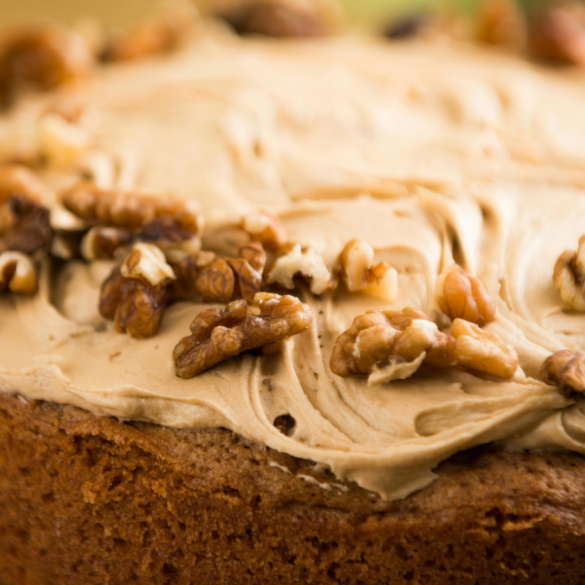
- Arrange walnut halves on top of the cake for a classic look. You can add your own creative twist by sprinkling chopped walnuts, dusting with cocoa powder or drizzling with melted chocolate!