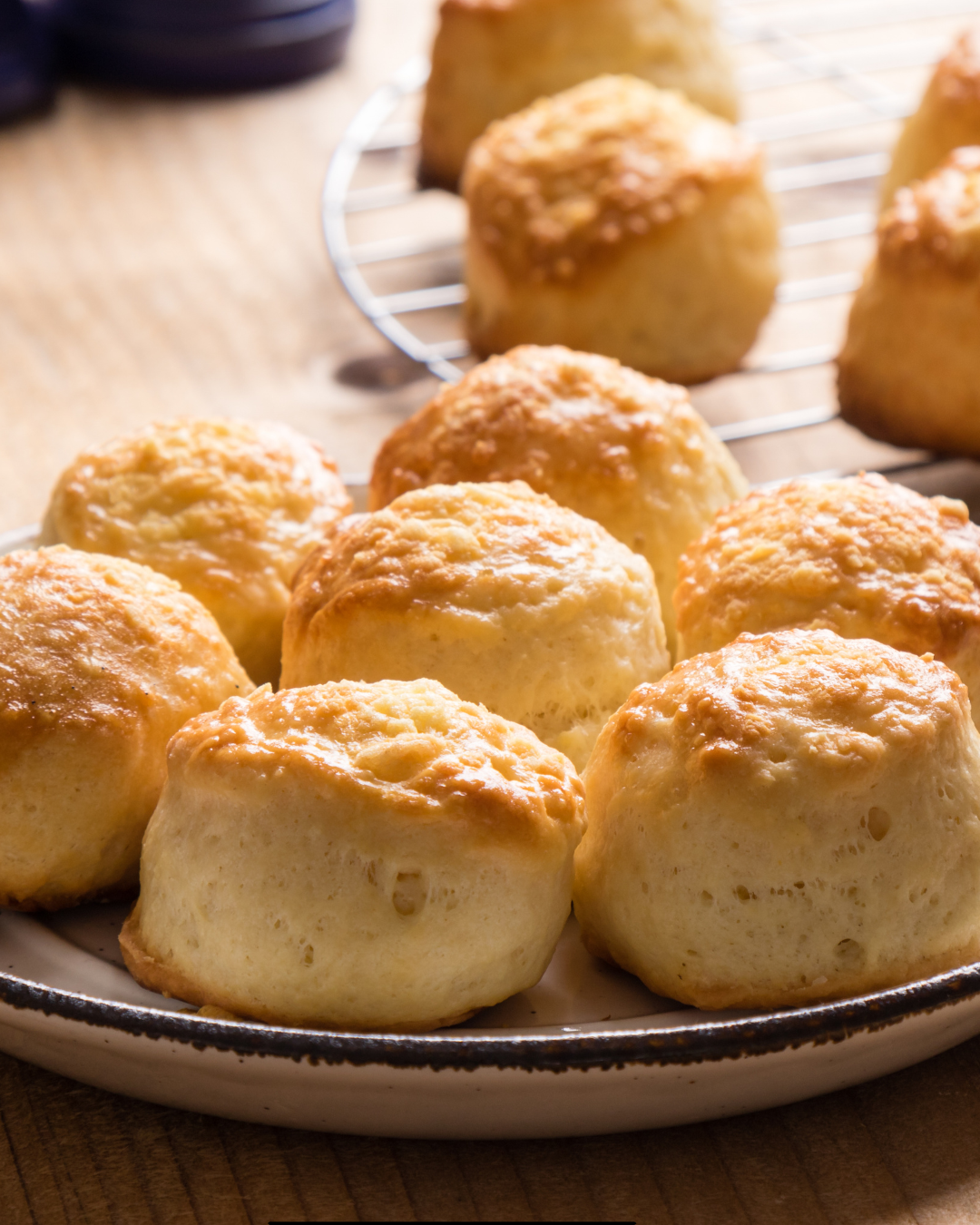
Cheese scones are a staple of British teatime, offering comforting, cheesy goodness in every bite. When it comes to classic British baking, few names resonate as strongly as Mary Berry. Known as the Queen of Cakes, her recipes are synonymous with simplicity and guaranteed deliciousness. But Mary’s expertise extends far beyond sweet treats, as her savoury bakes are equally beloved — and the Cheese Scones by Mary Berry is a shining example.
Table of Contents
How to make Cheese Scones by Mary Berry
Cheese scones by Mary Berry are a classic savory British baked treat—basically a cheesy twist on traditional scones.
Ingredients
Here’s what you’ll need to whip up about 8 cheese scones:
- 225g (8 oz) self-raising flour
- 1 tsp baking powder
- 1/4 tsp mustard powder (optional, adds a subtle tang)
- A pinch of cayenne pepper or paprika (optional, for a touch of warmth)
- 50g (1¾ oz) cold unsalted butter, cubed
- 100g (3½ oz) mature Cheddar cheese, grated (reserve 25g for topping)
- A pinch of salt (be cautious, as cheese can be salty)
- 1 large egg
- About 100ml milk (semi-skimmed or whole milk)
- The reserved grated cheese
- A splash of milk (to brush over the tops)
Instructions
- Preheat the oven: Set your oven to 200°C (180°C fan)/Gas Mark 6. Grease a large baking tray or line it with baking parchment.
- Prepare the dry ingredients: In a large mixing bowl, sift together the self-raising flour, baking powder, mustard powder, and cayenne pepper/paprika if using. Add a pinch of salt. Mix well.
- Rub in the butter: Add the cold, cubed butter to the bowl. Using your fingertips or a pastry cutter, rub the butter into the flour until the mixture resembles fine breadcrumbs.
- Add the cheese: Stir in the grated cheese (reserving some for the topping). Make sure the cheese is evenly distributed through the mixture.
- Mix the wet ingredients: In a separate bowl, beat the egg, then mix it with most of the milk (reserve a little to adjust the dough consistency later). Gradually add the liquid to the dry mixture.
- Form the dough: Gently combine the mixture using a knife or your hands until it forms a soft dough. If it feels too dry, add a touch more milk.
- Roll and cut: On a lightly floured surface, roll the dough out to about 2.5cm thick. Use a 6cm round cutter to cut out your scones. Avoid twisting the cutter as you press it down, as this can prevent the scones from rising evenly. Re-roll the scraps as needed.
- Prepare for baking: Place the scones on the prepared baking tray. Brush the tops lightly with milk, then sprinkle with the reserved cheese.
- Bake: Bake in the preheated oven for 12-15 minutes, or until golden brown and well risen. Transfer to a wire rack to cool slightly before serving.
- Serve: Best enjoyed warm, spread with butter. Pair with a nice bowl of soup or serve as part of an afternoon tea spread!
Top Tips for Perfect Cheese Scones
- Cold ingredients: Keep your butter and milk as cold as possible. The coldness helps achieve a flaky, airy texture.
- Don’t overmix: Be gentle when combining your wet and dry ingredients. Overworking the dough can lead to dense or tough scones.
- Choose a strong cheese: Mature or extra mature Cheddar adds the best flavour. Experiment with other hard cheeses like Red Leicester or Gruyère for variation.
- Bake immediately: Once the dough is formed, bake the scones right away to ensure they rise properly. Delaying can reduce the raising power.
- Freeze leftovers: Cheese scones freeze beautifully! Let them cool, then store in an airtight container in the freezer. Defrost and refresh in the oven before eating.
What to serve with
Cheese scones are versatile, savoury delights that can be served in so many ways.
1. Classic Butter Spread
Sometimes, simple is best. Split a warm cheese scone in half and spread it generously with good-quality salted butter. Allow it to melt slightly into the soft, fluffy interior – a perfect accompaniment to bring out the savoury richness of the cheese. If you’re feeling adventurous, try flavoured butter, such as:
- Garlic and herb butter
- Black pepper butter
- Chilli-infused butter
2. Soup Pairings
Cheese scones are chef’s kiss perfect to pair with a comforting bowl of soup. Use them as a hearty alternative to bread rolls or croutons. Here are some soups that go exceptionally well with cheese scones:
- Tomato soup: The tangy and slightly sweet flavour of tomato soup complements the cheesy, crumbly scones perfectly.
- Cream of broccoli or leek and potato soup: These creamy soups balance the sharpness of the cheddar in the scones.
- Carrot and coriander soup: The gentle warmth of this soup pairs beautifully with the savoury scones.
- Minestrone or lentil soup: Add a rustic twist by pairing these wholesome, chunky soups with Cheese Scones by Mary Berry.
3. As Part of Afternoon Tea
Cheese scones add a savoury dimension to an otherwise sweet afternoon tea spread. Serve alongside:
- Chutneys like onion chutney or tomato and chilli jam to top the scones.
- Creamy cheeses such as a dollop of cream cheese, mascarpone, or ricotta for a decadent touch.
- A selection of pickle or relish for a tangy kick.
Ingredients Substitutes
Cheese scones by Mary Berry rely on simple pantry staples, but it’s easy to tweak the ingredients to suit dietary needs, flavour preferences, or simply what you have available at home.
1. Self-Raising Flour
Substitute:
- Plain flour + baking powder: If you don’t have self-raising flour, use plain flour and add 2 teaspoons of baking powder per 225g (8 oz) of flour. This will mimic the leavening effect.
- Wholemeal flour: For a more rustic, fibre-rich result, use wholemeal flour or blend it with self-raising/plain flour (50/50 ratio). Wholemeal flour is slightly denser, so the scones might not rise as much, but the texture will still be satisfying.
2. Baking Powder
Substitute:
- Bicarbonate of soda (baking soda): If using plain flour, bicarb can replace baking powder, but since bicarb reacts with acid, you’ll need to add a few drops of lemon juice or yogurt to the recipe to balance it.
- Self-raising flour: Already includes baking powder, so if you’re using self-raising flour, there’s no need for extra leavening.
3. Butter
Substitute:
- Margarine: For a dairy-free or budget-friendly option, replace butter with a high-quality margarine. Make sure it’s cold, as it will need to be rubbed into the dry ingredients, such as butter.
- Vegetable oil: Use 40-50ml of vegetable oil instead of butter. While this alters the texture slightly (making it less flaky), it works well as a substitute.
- Coconut oil: For a vegan alternative, solidified coconut oil can be used. Note that this might add a hint of coconut flavour to the final scones.
4. Cheese
Substitute:
Cheese is the star of the show, but you can still experiment with alternatives depending on what’s in your fridge or your flavour preference:
- Other cheeses: Try using Gruyère, Red Leicester, Parmesan, Wensleydale, or Lancashire cheese for variety.
- Non-dairy cheese: For a vegan or lactose-free version, use store-bought vegan cheddar-style cheese. This may melt differently, but it works well in scones.
- Cream cheese or ricotta: If you’re low on hard cheese, you can mix in cream cheese or ricotta for a creamy texture, though the scones won’t have the same sharp, tangy flavour.
5. Mustard Powder
Substitute:
Mustard powder adds a subtle kick and flavour depth to the Cheese Scones by Mary Berry, but there are easy replacements:
- Dijon mustard: Mix 1 teaspoon into the wet ingredients for a similar tang.
- English mustard: Adds a stronger flavour, use sparingly (1/2 teaspoon).
- Paprika or cayenne: Adds warmth but without the mustard-like tang; use 1/4 teaspoon.
- Skip it altogether: If you don’t have it, the scones will still taste great—just slightly less sharp.
6. Milk
Substitute:
Milk helps bind the dough and contributes to the soft texture of the Cheese Scones by Mary Berry. If you’re out of milk or need a dairy-free substitute, try these:
- Buttermilk: Adds creaminess and moisture while enhancing the tangy flavour of the scones.
- Semi-skimmed/skim milk: Works well and is lighter than whole milk, but the difference is minimal.
- Plant-based milk: Use soy, almond, or oat milk for a dairy-free option. For best results, opt for unsweetened versions to avoid adding sweetness.
- Yogurt: Mix plain yogurt with a little water to loosen its consistency before adding to the dough.
Final Thoughts
Enjoy these delightful Cheese Scones by Mary Berry, a true crowd-pleaser for any occasion. As Mary Berry always says, simple recipes can yield the best results – and this one is no exception!
More Mary Berry Recipes:

Ingredients
- 225g (8 oz) self-raising flour
- 1 tsp baking powder
- 1/4 tsp mustard powder
- A pinch of cayenne pepper
- 50g (1¾ oz) cold unsalted butter, cubed
- 100g (3½ oz) mature Cheddar cheese, grated
- A pinch of salt
- 1 large egg
- About 100ml milk
- The reserved grated cheese
- A splash of milk
Instructions
- Preheat the oven: Set your oven to 200°C (180°C fan)/Gas Mark 6. Grease a large baking tray or line it with baking parchment.
- Prepare the dry ingredients: In a large mixing bowl, sift together the self-raising flour, baking powder, mustard powder, and cayenne pepper/paprika if using. Add a pinch of salt. Mix well.
- Rub in the butter: Add the cold, cubed butter to the bowl. Using your fingertips or a pastry cutter, rub the butter into the flour until the mixture resembles fine breadcrumbs.
- Add the cheese: Stir in the grated cheese (reserving some for the topping). Make sure the cheese is evenly distributed through the mixture.
- Mix the wet ingredients: In a separate bowl, beat the egg, then mix it with most of the milk (reserve a little to adjust the dough consistency later). Gradually add the liquid to the dry mixture.
- Form the dough: Gently combine the mixture using a knife or your hands until it forms a soft dough. If it feels too dry, add a touch more milk.
- Roll and cut: On a lightly floured surface, roll the dough out to about 2.5cm thick. Use a 6cm round cutter to cut out your scones. Avoid twisting the cutter as you press it down, as this can prevent the scones from rising evenly. Re-roll the scraps as needed.
- Prepare for baking: Place the scones on the prepared baking tray. Brush the tops lightly with milk, then sprinkle with the reserved cheese.
- Bake: Bake in the preheated oven for 12-15 minutes, or until golden brown and well risen. Transfer to a wire rack to cool slightly before serving.
- Serve: Best enjoyed warm, spread with butter. Pair with a nice bowl of soup or serve as part of an afternoon tea spread!