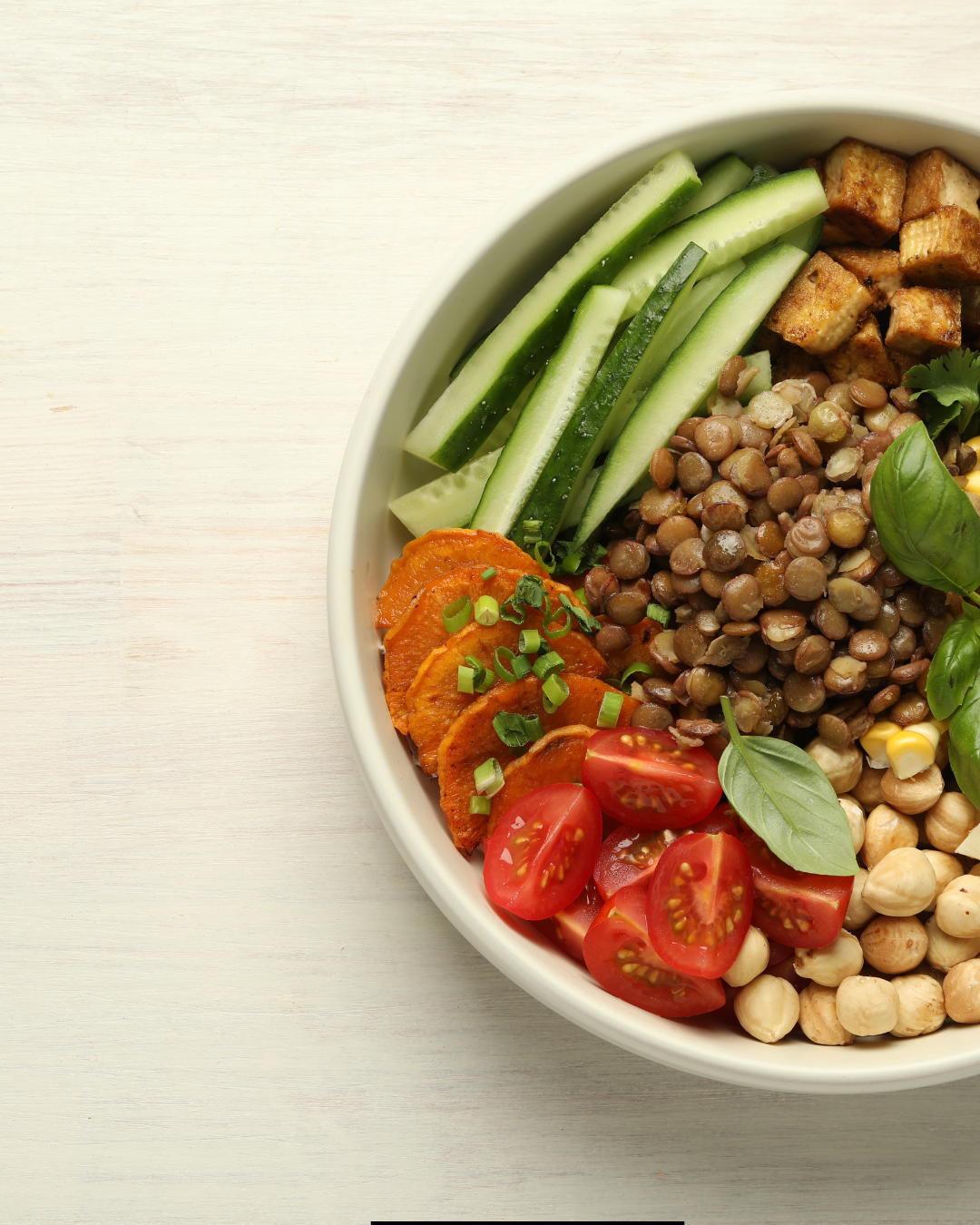
In my own journey toward healthier eating (hello, trying to make veggies exciting again!), I discovered the magic of veggie bowls. Not only are they a great way to pack in nutrients, but they’re also endlessly customizable. Think of them like an edible work of art—layering flavors, textures, and colors that come together in one wholesome, crave-worthy dish.
Table of Contents
How to make Veggie Bowl
A veggie bowl is basically a colourful, all-in-one meal served in a bowl, built around a variety of vegetables—often combined with grains, protein, and a flavourful sauce or dressing.
Ingredients
Base
Choose one or a combination of these to form the foundation of your bowl:
- Grains: Brown rice, quinoa, farro, couscous, or cauliflower rice for a low-carb option.
- Greens: Spinach, kale, arugula, mixed greens, or romaine lettuce.
Vegetables
Use a variety of raw, roasted, or steamed vegetables for a balanced bite:
- Roasted veggies: Sweet potatoes, broccoli, Brussels sprouts, carrots, or zucchini.
- Raw veggies: Cherry tomatoes, cucumbers, shredded carrots, radishes, or bell peppers.
- Steamed veggies: Green beans, snap peas, or asparagus.
Protein
Add plant-based protein for extra satiation:
- Tofu (pan-fried or baked)
- Tempeh (marinated and grilled)
- Chickpeas (roasted or boiled)
- Edamame beans
- Lentils or black beans
Healthy Fats
Incorporate healthy fats to keep it nourishing:
- Avocado slices
- Nuts (almonds, cashews, walnuts)
- Seeds (chia, pumpkin, sesame)
- Tahini drizzle
Toppings & Garnishes
Sprinkle toppings for added texture and flavor:
- Fresh herbs (cilantro, parsley, mint)
- Roasted seeds (sunflower or pumpkin seeds)
- Nutritional yeast
- Toasted sesame seeds
Dressings & Sauces
The sauce ties it all together! Try one of these or create your own:
- Lemon tahini dressing
- Peanut butter sauce (perfect for Asian-style bowls)
- Spicy sriracha mayo
- Greek yogurt with lemon and garlic
- Olive oil with balsamic glaze
Instructions
Here’s how you can build your veggie bowl step-by-step:
- Cook your grains according to package instructions. If you’re using greens, wash them thoroughly and dry. You can opt for a mix of grains and greens if desired.
- Chop raw vegetables into bite-sized pieces.
- Roast or steam vegetables as needed (e.g., roast sweet potatoes for 25-30 minutes at 400°F/200°C with olive oil and seasoning).
- If using tofu, press it to remove excess water, then pan-fry it until golden.
- Season chickpeas with spices (paprika, cumin, salt) and roast for 15-20 minutes at 400°F/200°C for crunch.
- Start with the base (grains/greens).
- Layer on your vegetables—roasted, steamed, and raw.
- Add your protein choice (tofu, chickpeas, etc.).
- Sprinkle healthy fats like nuts or seeds.
- Finish your creation with a generous drizzle of your chosen dressing or sauce.
- Add fresh herbs, seeds, or nutritional yeast to elevate the flavors. Serve immediately or pack it for a healthy meal on the go!
Helpful Tips
- Roast large batches of veggies and cook grains ahead of time for quick assembly during the week.
- Combine crunchy (raw veggies, nuts) and soft (avocado, roasted sweet potatoes) textures for a well-rounded bowl.
- Roast vegetables and proteins with your favorite spices to boost flavor. Try garlic powder, smoked paprika, cumin, or chili flakes.
- Opt for gluten-free grains like quinoa or rice.
- Use low-calorie dressings or skip nuts/seeds for lower-fat options.
Ingredients Substitutes
One of the best things about making a Veggie Bowl is its incredible versatility. No matter your dietary restrictions, ingredient availability, or taste preferences, there’s always a way to adapt the recipe!
Substitutes for the Base
The base of a veggie bowl provides structure and often contributes to the bowl’s overall nutrient profile.
1. Grains
If a recipe calls for grains but you want something different or don’t have the suggested option:
Substitute for Rice:
- Try quinoa, buckwheat, farro, barley, couscous, or wild rice.
- For a low-carb option, use cauliflower rice or broccoli rice.
Substitute for Quinoa:
- Use millet, bulgur, brown rice, or even lentils.
- Gluten-Free Options: Stick to quinoa, rice, or millet if specific grains are off-limits.
2. Leafy Greens
If you don’t have leafy greens or prefer a different variety:
- Spinach Substitute: Use arugula, kale, Swiss chard, or collard greens.
- Romaine Lettuce Substitute: Try iceberg lettuce, mixed spring greens, or cabbage for crunch.
- No Greens Option: Use roasted vegetables like zucchini or asparagus as the base instead of fresh greens.
Substitutes for Vegetables
The veggies are the highlight of the bowl, but if you’re missing any, there are plenty of replacements to work with.
1. Roasted Vegetables
If you don’t have sweet potatoes or other suggested roasted options:
- Sweet Potato Substitute: Use butternut squash, carrots, pumpkin, or parsnips.
- Broccoli Substitute: Swap with cauliflower, green beans, or cabbage wedges.
- Zucchini Substitute: Try eggplant, yellow squash, or roasted peppers.
2. Raw Vegetables
Missing one of the raw veggies or want to replace it?
- Cucumber Substitute: Use celery, green bell peppers, or zucchini ribbons.
- Cherry Tomato Substitute: Use diced regular tomatoes, sun-dried tomatoes, or roasted red peppers.
- Carrot Substitute: Try shredded radish, jicama, or diced bell peppers for crunch.
3. Steamed Vegetables
Steamed veggies can easily be swapped out depending on availability:
- Green Beans Substitute: Use snap peas, asparagus, or broccoli.
- Substitute for Asparagus: Try roasted fennel, celery sticks, or spinach (lightly sautéed).
Substitutes for Protein
Plant-based proteins are essential for a well-rounded veggie bowl. If you don’t have certain items or want an alternative:
1. Tofu
Substitutes: Tempeh, seitan, or baked chickpeas can replicate the texture and protein content of tofu.
2. Chickpeas
Substitutes:
- Use lentils, cannellini beans, black beans, or kidney beans as a hearty alternative.
- For a crunchier option, try roasted edamame or peanuts.
3. Lentils
Substitutes:
- Opt for black beans, pinto beans, or quinoa to maintain the protein and fiber balance.
4. Edamame
Substitutes:
- Replace shelled edamame with peas or cooked green beans for a similar look.
5. Tempeh
Substitutes:
- Switch to tofu, mushrooms (portobello or shiitake for a meaty texture), or soy chunks.
Substitutes for Healthy Fats
Healthy fats add richness, but there are multiple ways to work around specific dietary needs or substitutions.
1. Avocado
Substitutes: Use hummus, olive tapenade, or a drizzle of olive oil for healthy fats and creaminess.
2. Nuts
Substitutes: If nuts like almonds or cashews aren’t available, try seeds (pumpkin, sunflower, chia) for crunch.
3. Tahini
Substitutes: Use almond butter, peanut butter, or sunflower seed butter.
Final Thoughts
That’s the beauty of a veggie bowl—it’s endlessly customizable. You’re the artist, and your ingredients are your palette! Try out combinations, experiment with flavors, and make every bowl uniquely yours.
More Veggie Recipes:
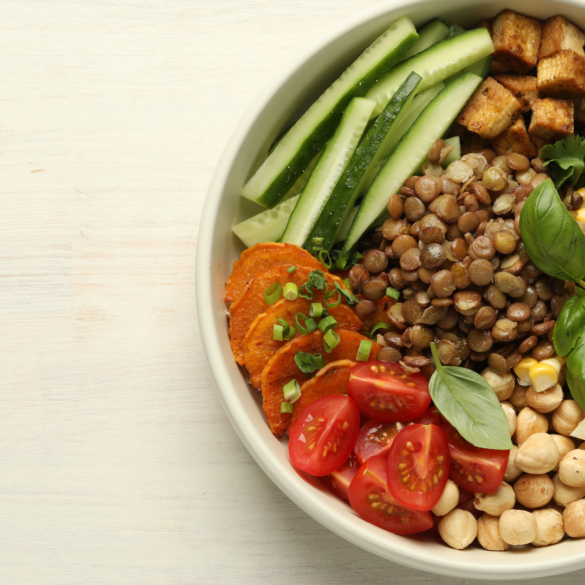
Ingredients
Base
Choose one or a combination of these:
- Grains: Brown rice or quinoa
- Greens: Spinach, kale or arugula.
Vegetables
Use a variety of raw, roasted, or steamed vegetables:
- Roasted veggies: Sweet potatoes, broccoli or zucchini.
- Raw veggies: Cherry tomatoes, cucumbers or bell peppers.
- Steamed veggies: Green beans, snap peas, or asparagus.
Protein
Add plant-based protein for extra satiation:
- Tofu (pan-fried or baked)
- Tempeh (marinated and grilled)
- Chickpeas (roasted or boiled)
- Edamame beans
- Lentils or black beans
Healthy Fats
Incorporate healthy fats to keep it nourishing:
- Avocado slices
- Nuts (almonds, cashews, walnuts)
- Seeds (chia, pumpkin, sesame)
- Tahini drizzle
Toppings & Garnishes
Sprinkle toppings for added texture and flavor:
- Fresh herbs (cilantro, parsley, mint)
- Roasted seeds (sunflower or pumpkin seeds)
- Nutritional yeast
- Toasted sesame seeds
Dressings & Sauces
The sauce ties it all together!:
- Lemon tahini dressing
- Peanut butter sauce (perfect for Asian-style bowls)
- Spicy sriracha mayo
- Greek yogurt with lemon and garlic
- Olive oil with balsamic glaze
Instructions
- Cook your grains according to package instructions. If you’re using greens, wash them thoroughly and dry. You can opt for a mix of grains and greens if desired.
- Chop raw vegetables into bite-sized pieces.
- Roast or steam vegetables as needed (e.g., roast sweet potatoes for 25-30 minutes at 400°F/200°C with olive oil and seasoning).
- If using tofu, press it to remove excess water, then pan-fry it until golden.
- Season chickpeas with spices (paprika, cumin, salt) and roast for 15-20 minutes at 400°F/200°C for crunch.
- Start with the base (grains/greens).
- Layer on your vegetables—roasted, steamed, and raw.
- Add your protein choice (tofu, chickpeas, etc.).
- Sprinkle healthy fats like nuts or seeds.
- Finish your creation with a generous drizzle of your chosen dressing or sauce.
- Add fresh herbs, seeds, or nutritional